Ridgeline Control Finger-Loop Assisted Knife - Desert Tan
15 sold in last 24 hours
A compact assisted opening knife built for dusty trails and long shifts, the Desert Sentinel locks into your hand with a secure finger loop for confident control. The 2.5-inch 3Cr13 clip point handles everyday cutting tasks, while the matte tan blade and stainless handle keep reflections low and durability high. A liner lock, sturdy pocket clip, and one-hand flipper deployment make this an easy EDC choice when you want a small knife that stays put, even with sweat, gloves, or fast movement.
What This Knife Actually Does in Your Hand
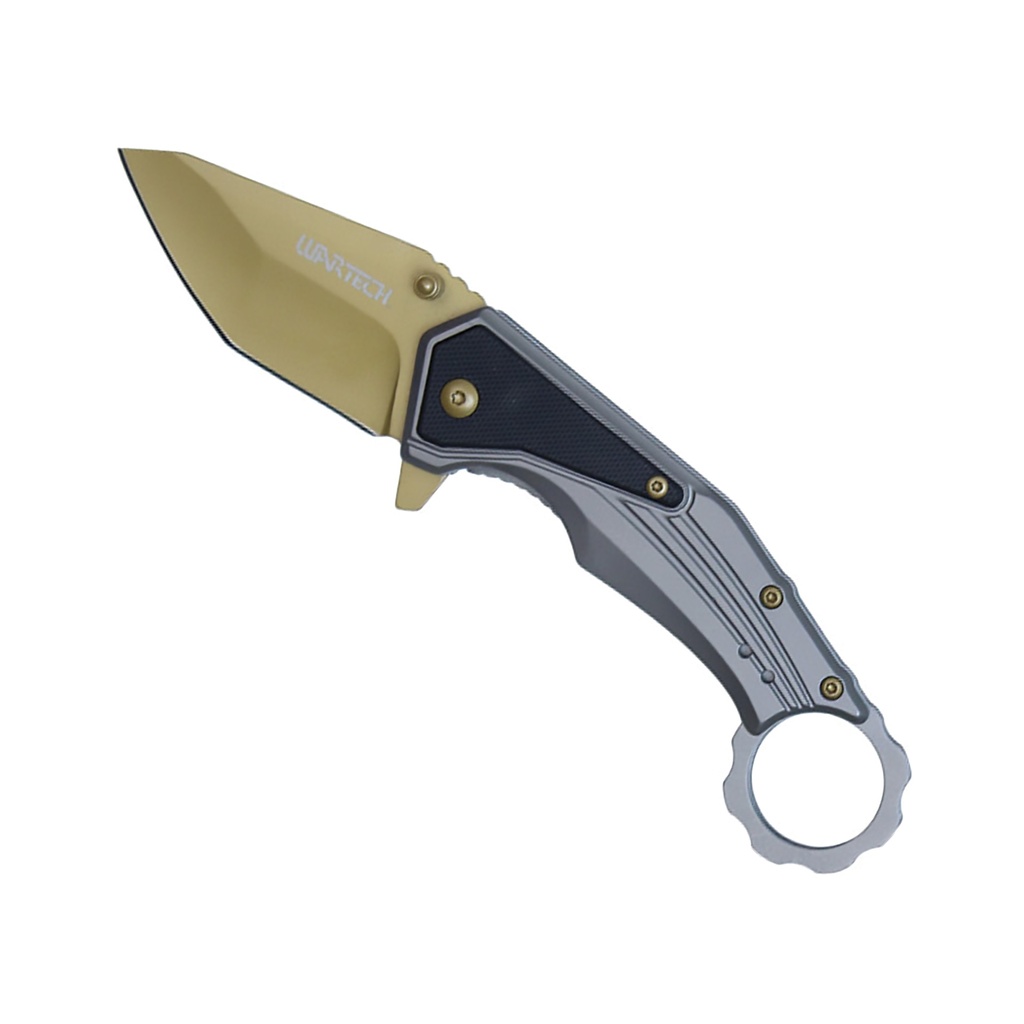
The Desert Sentinel Finger-Loop Assisted Opening Knife - Desert Tan is built for one thing: controlled cutting in real-world conditions where grip and retention matter more than looks. The finger loop at the end of the handle anchors the knife in your hand, while the assisted opening mechanism gets the 2.5-inch blade into play fast with a simple press on the flipper tab.
This is a compact EDC knife with tactical influence, not a wall-hanger. It’s designed for people who work outdoors, hike, or carry a knife daily and want extra security in the grip—especially when hands are sweaty, gloved, or moving quickly.
How the Assisted Opening Mechanism Works
This is a spring-assisted folding knife, not an automatic. That means you start the opening motion manually with the flipper tab, and an internal spring takes over to snap the blade fully open. It stays safely closed in your pocket until you deliberately press that flipper.
The liner lock engages once the blade is open, bracing the tang from the inside of the handle. To close, you simply push the liner lock aside with your thumb and fold the blade back into the handle. It’s a proven, widely used mechanism that balances speed, safety, and reliability for everyday carry.
Blade Design: Compact, Point-Driven Utility
Clip Point Shape for Precise, Controlled Cuts
The 2.5-inch clip point blade gives you a sharp, controllable tip for detail work—opening packaging, cutting cord, trimming material—without feeling bulky. The swedged spine near the tip helps the point penetrate more easily while maintaining a relatively strong profile for a knife this size.
3Cr13 Stainless Steel and Matte Desert Finish
The blade is made from 3Cr13 stainless steel, a practical working steel that resists rust and is easy to sharpen. It won’t pretend to be a high-end super steel, but it’s honest, predictable, and perfectly suited for a budget-friendly EDC. The matte desert tan finish reduces glare, making it more discreet in bright sun and adding a visual nod to desert and field use.
Handle, Finger Loop, and Real-World Control
Finger Loop Retention Under Stress
The standout feature of this knife is the finger loop at the back of the handle. That ring is not just styling—it’s functional retention. Slip a finger through and the knife stays anchored in your hand, even if your grip loosens, you’re wearing gloves, or you’re working at odd angles. This is especially valuable in tactical-style grips or when you’re moving quickly and don’t want to drop your blade.
Stainless Handle with Textured Inlays
The handle is stainless steel with black textured inlay panels that add both grip and visual contrast. Stainless gives you durability and impact resistance, while the inlays help keep the knife from feeling slick. Gold-tone hardware at the pivot and screws adds a touch of style without compromising function.
Carry Format and Everyday Use
Closed, the Desert Sentinel measures about 4.75 inches, which rides comfortably in most pockets without dominating them. The sturdy pocket clip keeps the knife in a consistent position, so you can build reliable draw habits over time.
Deployment is straightforward: draw from your pocket, establish your grip, tap the flipper tab with your index finger, and the assisted mechanism snaps the blade open. For users who like to carry a small knife that can still be brought into action quickly, this balances speed and control well.
Where This Knife Fits in Your Kit
This is best understood as a compact tactical-style EDC knife. The finger ring borrows from karambit-influenced designs, but the blade itself is a practical clip point suited to everyday cutting tasks. That combination makes it appealing to:
- EDC enthusiasts who want a secure, retention-focused folder
- Outdoor users who work around dust, sweat, or gloves
- People who prefer a knife that feels locked into the hand
It’s not a heavy-duty chopper or a specialized field-dressing blade. Instead, it’s the kind of knife you reach for all day for small, frequent tasks—and know it will stay in your hand when it matters.
Build Quality Details That Matter
Liner Lock Confidence
The liner lock is a familiar, easy-to-use mechanism that most knife users trust. When the blade opens, the metal liner on one side springs into place behind the tang. You can visually and physically confirm it’s engaged. This gives you a solid, repeatable lockup that’s simple to operate one-handed.
Assisted Opening That Stays In Its Lane
The spring assist is tuned for a decisive snap without feeling jumpy. You still have to start the motion intentionally, which helps prevent accidental opening in the pocket, but once you do, the knife comes fully open with a consistent, positive feel. That predictability under stress is worth more than flashy gimmicks.
What People Ask Before Buying a Stun Gun for Protection
How effective are stun guns for self defense?
A stun gun for self defense is a close-contact tool. Its effectiveness depends on three things: amperage (current), how long you maintain contact, and where you apply it. A decent stun gun can cause pain, muscle disruption, and hesitation, but it does not throw people backwards like in movies. It’s most effective when used at very close range on large muscle groups, paired with movement and an escape plan—not as your only strategy.
Does voltage or amperage matter more in a stun gun?
Voltage gets all the marketing headlines, but amperage is what actually does the work. Once voltage is high enough to arc through clothing and skin, more voltage mostly becomes sales theater. Amperage—combined with contact time and contact area—determines how much disruption the stun gun can cause. A realistically rated, well-built stun gun with stable current and good contact points is more trustworthy than any “million volt” claim without specs.
Is this stun gun legal to carry in my state?
Stun gun legality in the U.S. varies by state and sometimes by city. Some states allow stun guns for personal protection with few restrictions, others require permits, and a few have tighter controls or bans in certain locations (schools, government buildings, etc.). Before you carry a stun gun for self defense, check your state and local laws, including any age, permit, or location-based restrictions, and re-check periodically—regulations do change.
Carrying with Competence
While this product is a knife, not a stun gun, the same mindset applies to both: understand what your tool can and cannot do, carry it in a consistent place, and practice accessing and using it safely. The Desert Sentinel’s assisted opening, finger loop retention, and pocket clip are all there to support that kind of deliberate, prepared carry.
If you want a compact, desert-themed, finger-loop assisted opening knife that favors control over flash, this design earns its keep by being easy to draw, hard to drop, and straightforward to maintain. That’s what reliability looks like in a small EDC folder.
| Blade Length (inches) | 2.5 |
| Overall Length (inches) | 7.25 |
| Closed Length (inches) | 4.75 |
| Blade Color | Tan |
| Blade Finish | Matte |
| Blade Style | Clip Point |
| Blade Edge | Plain |
| Blade Material | 3CR13 Steel |
| Handle Finish | Matte |
| Handle Material | Stainless Steel |
| Theme | Desert |
| Pocket Clip | Yes |
| Deployment Method | Spring-assisted |