Trench-Frame Rapid-Deploy Knuckle Guard Knife - Desert Aluminum
5 sold in last 24 hours
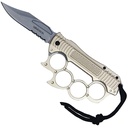
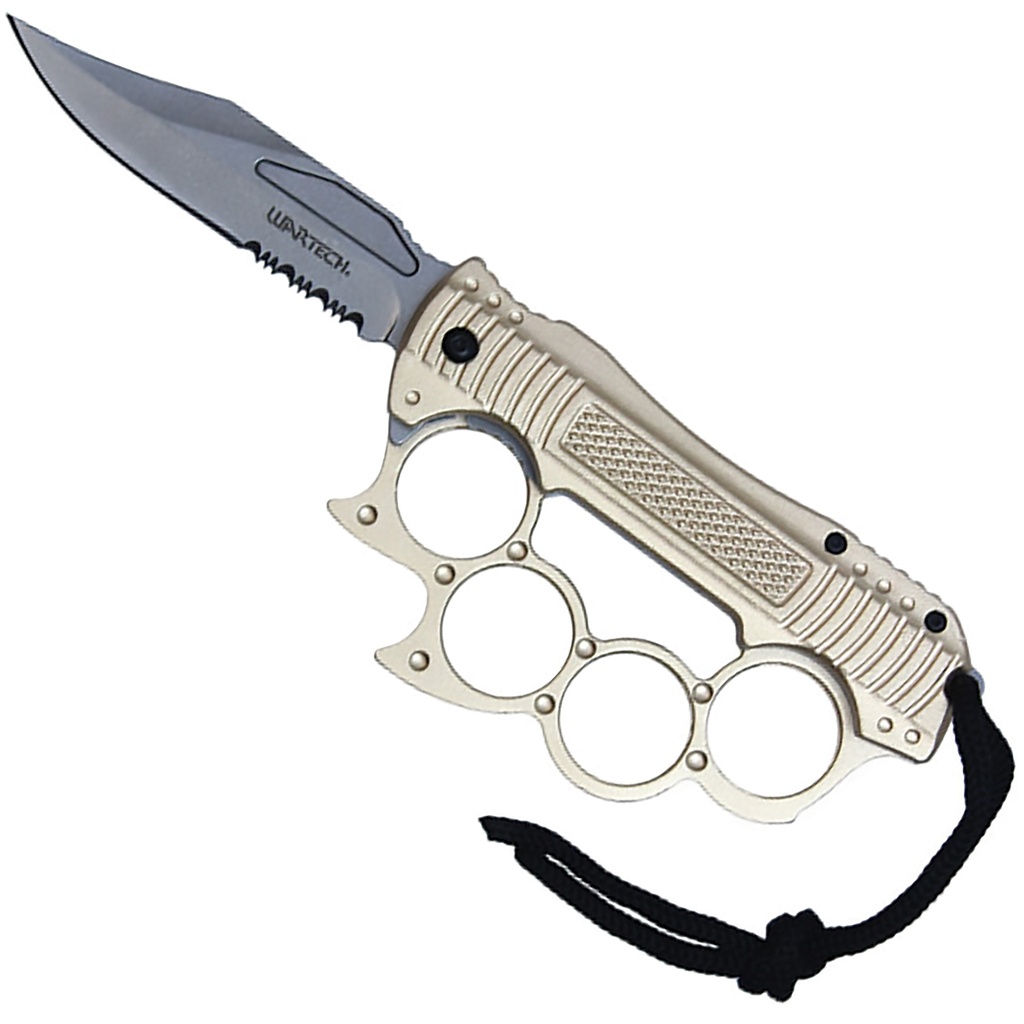
This assisted opening knuckle knife locks into your hand like a trench-frame tool built for fast control. The 4-inch black clip point blade with partial serration tackles rope, straps, and packaging, while the desert aluminum knuckle guard handle keeps your grip anchored. Spring-assisted deployment, liner lock security, pocket clip, and lanyard cord make it a practical, tactical carry for users who want a bold self-defense profile and retailers who know trench-style designs move fast off the shelf.
What This Trench-Frame Assisted Knuckle Knife Actually Does
The Trench-Frame Rapid-Deploy Knuckle Guard Knife - Desert Aluminum is a modern take on the classic trench knife: a four-finger guard for locked-in control and a spring-assisted blade that gets into play quickly. This is not a toy or a prop. It’s a tactical folding knife with an integrated knuckle-style handle, built for users who want a decisive grip, a cutting edge that can work through real material, and a visual presence that clearly says “don’t crowd me.”
With a 4-inch black clip point blade, partial serration, and a desert-tan aluminum knuckle frame, this assisted opening knife is designed for self-defense style carry and hard-use utility—opening boxes, cutting cord, scraping, and controlled thrusting or slicing when needed.
How This Assisted Knuckle Knife Works in Real Use
This is a spring-assisted folding knife, not an automatic. You start the opening with the thumb stud, and the internal spring takes over to snap the blade into the locked position. That means fast, repeatable deployment with more control than a true auto—useful when you need speed but also want predictable handling.
The liner lock engages behind the tang of the blade once opened. Under normal use, that gives you a stable cutting platform for forward, reverse, and hammer grips. The four-hole knuckle guard handle lets you thread your fingers through and lock the knife into your hand. That design does two important things: it stabilizes your wrist alignment during cutting, and it makes it harder for someone to knock the knife out of your grip if you’re jostled or grabbed.
Why This Trench-Frame Knife Works for Personal Protection
In a self-defense context, tools that are easy to hang onto matter more than tools that simply look aggressive. The trench-frame knuckle handle gives you a tactile index: once your fingers are in the guard, the orientation is obvious even under stress. You know where the edge is, where the spine is, and where your thumb can drive pressure.
The partially serrated black clip point blade combines three useful traits:
- Clip point tip for controlled piercing and precise work.
- Plain edge section for cleaner push cuts and carving.
- Serrated section for biting into rope, webbing, or tough packaging.
For personal protection, that means you have a blade that can both cut and tear through material like clothing, light straps, or obstructive gear without babying it. The visual profile—black blade, trench-style knuckle frame, desert finish—also acts as a deterrent in some situations. People recognize the silhouette of a knuckle knife; that recognition alone can change someone’s behavior before force is ever needed.
Build Quality Details That Matter Under Stress
Blade and Edge: 3CR13 Steel in a Practical Grind
The blade is made from 3CR13 stainless steel, a workhorse budget steel known for being easy to sharpen and resistant to basic corrosion. It’s not a boutique steel, and that’s actually an advantage for many users: you can bring back a usable edge with a simple field sharpener or pocket stone. For a tool that may ride in a glove compartment, work bag, or duty belt, simple maintenance beats fragile high-end performance.
The black finish on the blade helps cut glare and looks at home with tactical gear. It also adds a bit of extra corrosion resistance over bare steel, provided you don’t abuse it with heavy scraping on metal or stone.
Handle, Knuckle Guard, and Hardware
The desert aluminum handle keeps weight manageable while still feeling rigid. Integrated four-finger holes form the knuckle guard style frame, giving you both protection for the fingers and a secure anchor for the rest of your hand. Textured grip areas on the handle help your fingers stay in place if your hands are sweaty or wet.
Jimping along the spine lets your thumb dig in for more control on push cuts or detailed work, and Torx hardware construction means you can tighten or service the knife if screws loosen over time. A liner lock inside the handle holds the blade open; as with any liner lock, routine inspection and basic care go a long way toward reliability.
Carry Reality: How This Knife Rides and Deploys
Pocket Clip, Lanyard, and Everyday Access
The pocket clip allows typical tip-down carry along the edge of a pocket or on a belt or vest. This keeps the knife accessible without advertising it from a distance. The integrated lanyard hole and included cord add another layer: you can tether it inside a bag, hang it where you can grab it quickly, or use the cord as an additional index point when drawing under stress.
At 5 inches closed and about 9 inches overall open, this is not a tiny minimalist folder. It’s a full-size tactical assisted opening knife that rewards deliberate carry: clipped in a consistent pocket, staged in a bag’s dedicated slot, or attached inside a locker or vehicle console so you always know exactly where it is.
Deployment Under Pressure
Spring-assisted opening works well for users who practice a simple, repeatable draw-and-open motion. The key is consistency: same pocket, same orientation, same thumb-stud sweep every time. With a trench-frame handle, you’ll feel the finger holes lining up as you grip, so once your hand closes, your thumb is already positioned close to the stud. That reduces fumbling and lets you concentrate on your surroundings instead of fighting with your gear.
What People Ask Before Carrying a Trench-Style Knuckle Knife
How effective is a knuckle guard knife for self defense?
Effectiveness depends on three things: access, retention, and intent. A knuckle guard knife like this one improves retention—once your fingers are through the guard, it’s much harder for someone to strip the tool out of your hand. The blade gives you cutting and thrusting capability with a familiar punch-like motion. However, no knife automatically makes someone safer. Training in basic drawing, retention, and distance management is what turns a tool into a viable self-defense option. This design gives you a strong starting platform if you’re willing to practice.
Is this knuckle knife legal to carry where I live?
Knuckle guard knives occupy a legally sensitive category in many areas. Some states regulate brass knuckles, knuckle dusters, or trench knives specifically; others fold them into broader definitions of dangerous weapons. You need to check both your state law and, in many cases, local city or county ordinances. Look for terms like “knuckle knife,” “trench knife,” “metal knuckles,” or “knuckle duster.” If you’re a security professional or work on private property with specific policies, confirm with your employer or legal counsel before making this a daily carry piece.
How should I carry and train with this design responsibly?
First, choose a consistent carry position where you can access the knife with your dominant hand without fishing around. Second, practice drawing and opening on an unloaded, safe knife in a controlled environment: grip, finger-through-guard, thumb to stud, open, then safely close. Third, seek self-defense training that respects legal boundaries and emphasizes avoidance, de-escalation, and force law. A trench-style knife is a powerful tool; responsible carry means understanding when not to bring it into a situation as much as when you might need it.
Practical Confidence: A Trench-Frame Knife for Realistic Use
The Trench-Frame Rapid-Deploy Knuckle Guard Knife - Desert Aluminum is for users who want a full-size, visually assertive tactical folder with a secure knuckle frame grip and fast assisted opening. It doesn’t pretend to be a gentleman’s pocket knife, and it doesn’t need inflated marketing claims. Instead, it offers what matters: a controllable 4-inch partially serrated blade, a locked-in trench-style grip, robust aluminum construction, and carry options that make daily access straightforward.
Carried with a clear understanding of its legal status and used within a solid self-defense framework, this knife fits naturally into the kit of tactical gear enthusiasts, security personnel on private sites, and buyers who value a firm, trench-style grip over subtlety. Learn its draw, respect its capabilities, and it becomes exactly what a serious user wants from a modern trench-frame folder: calm, ready, and under your control.
| Blade Length (inches) | 4 |
| Overall Length (inches) | 9 |
| Closed Length (inches) | 5 |
| Blade Color | Black |
| Blade Finish | Black |
| Blade Style | Clip Point |
| Blade Edge | Partial-Serrated |
| Blade Material | 3CR13 Steel |
| Handle Finish | Matte |
| Handle Material | Aluminum |
| Theme | Knuckle Guard |
| Pocket Clip | Yes |
| Deployment Method | Spring-assisted |
| Lock Type | Liner lock |