
Field Armorer M1 Garand Technical Manual - Army Yellow
12 sold in last 24 hours
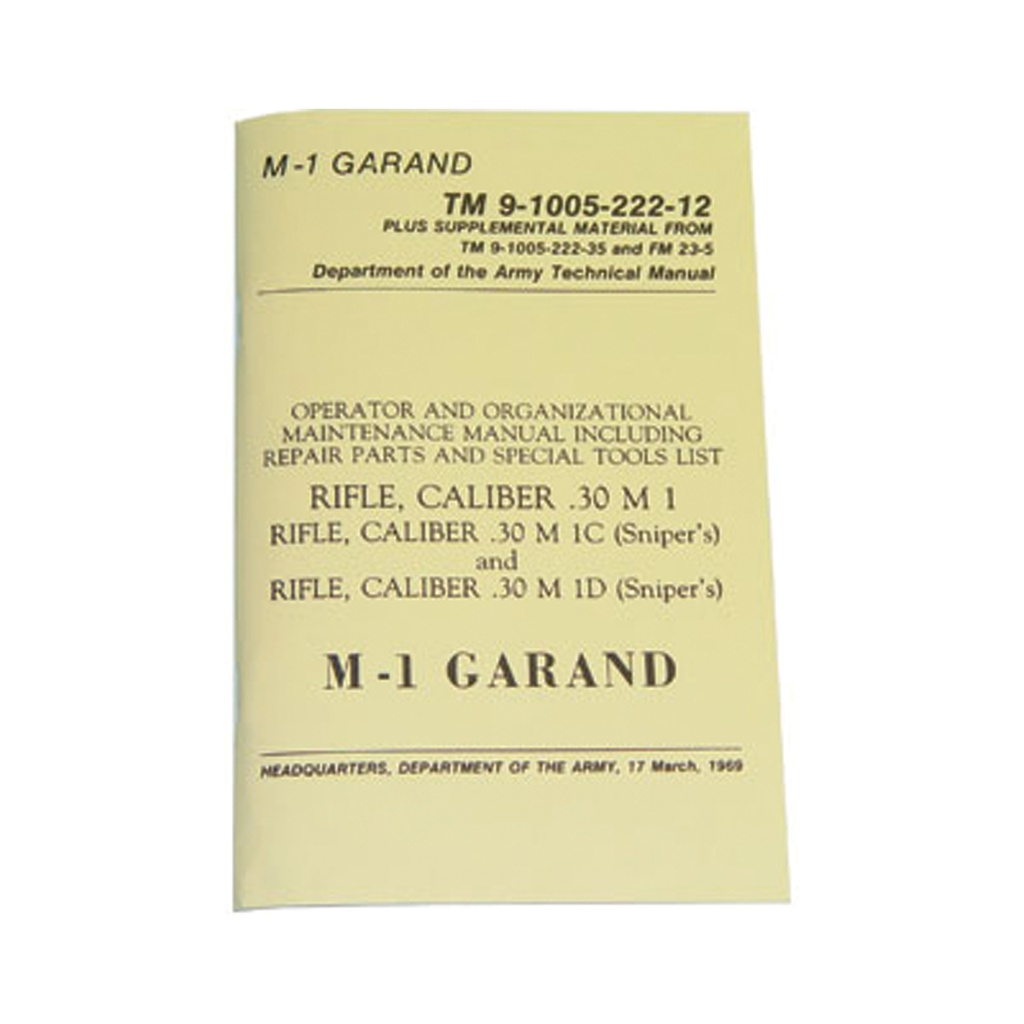
This M1 Garand technical manual is the kind of reference an armorer keeps within arm’s reach, not sealed on a shelf. In clear Army manual format, it walks through operator and organizational maintenance for the M1, M1C, and M1D—procedures, checklists, parts, and tools with no fluff. Whether you’re a collector, reenactor, gunsmith, or range regular, this ordnance-yellow booklet gives you the authoritative guidance you need to keep a classic service rifle running right.
What This M1 Garand Technical Manual Actually Does
This isn’t a coffee-table history book. The Field Armorer M1 Garand Technical Manual - Army Yellow is a working reference built in the original Department of the Army format. It’s meant to sit on the bench next to your rifle, get pages thumbed, and guide you through real maintenance tasks on the M1, M1C, and M1D rifles.
Where most books talk about the Garand as an icon, this manual treats it as a machine. It gives you the official procedures, checklists, and diagrams an armorer would use to keep a service rifle safe, reliable, and range-ready.
How This Technical Manual Works and What It Covers
Think of this manual as a structured workflow for caring for your M1 Garand, not a casual read. It follows the classic Army technical manual layout, which means you get:
- Operator and organizational maintenance procedures – what the shooter and unit-level armorer are expected to do
- Clear checklists – step-by-step tasks that can be followed under time pressure
- Exploded diagrams and parts callouts – so you’re not guessing what a component is or where it fits
- Repair parts and special tools references – exactly what you need to support safe function
Because it’s drawn from TM 9-1005-222-12 with supplemental material from TM 9-1005-222-35 and FM 23-5, you’re not just getting one slice of information. You’re getting the streamlined, no-fluff version of what the Army thought an operator and unit armorer should have on hand.
Why This Edition Matters for Practical Rifle Care
Lots of modern guides mix opinion, lore, and modification advice. That has its place. But if you want to know how the system was meant to run, you start with the original technical manual.
Authentic Procedures, Not Internet Guesswork
This M1 Garand technical manual lays out procedures in the same risk-conscious way a professional armorer thinks: clear inspection points, safety warnings, and straightforward maintenance tasks that keep the rifle within its design envelope. That’s valuable if you’re:
- Evaluating a surplus rifle for basic safety and function
- Bringing a stored rifle back into rotational use
- Teaching new shooters how to respect the platform mechanically
Instead of hunting through forum posts and conflicting advice, you get a single, authoritative baseline for what “right” looks like.
Bench-Friendly, Range-Friendly Format
The softcover, ordnance-yellow booklet format is deliberate. It lies flat enough to sit open on the bench, the text is laid out for quick scanning, and the minimalist design keeps your focus on procedures and diagrams. This isn’t fragile or precious—you can pencil notes, flag pages, and treat it as a tool.
Build Details That Matter to Armorers and Collectors
True Army Technical Manual Layout
The cover and interior follow the classic Department of the Army style: TM number (TM 9-1005-222-12), rifle designations (M1, M1C, M1D), and the structured sectioning that makes it easy to jump straight to the task you need. If you’ve used any other military field or technical manual, you’ll recognize the rhythm immediately.
Coverage of Sniper Variants: M1C and M1D
Most generic M1 Garand books barely mention the sniper models. This manual specifically covers the M1C and M1D variants as part of its scope, which matters if you work with or collect those rifles. You get the same organized approach to inspection and maintenance that the base rifle receives.
Where This Manual Fits in Your Gear and Library
From a practical standpoint, this M1 Garand technical manual fills a specific niche between a gunsmithing textbook and a casual enthusiast’s guide:
- For collectors: It documents the correct, period-accurate way the rifle was intended to be maintained—useful for preserving value and configuration.
- For range-goers: It offers systematic safety and function checks you can integrate into your pre-range routine.
- For armorers and instructors: It provides a common reference to teach from, so your students or customers hear the same standards you’re using.
Because it’s compact and softcover, it’s easy to keep in a range bag, armorer’s kit, or safe door pocket so the information is where you need it when you’re actually working on the rifle.
What People Ask Before Buying a Technical Manual Like This
How detailed is this M1 Garand manual for maintenance?
It’s written at the operator and organizational maintenance level, which is the Army’s way of saying: enough detail for the shooter and unit armorer to safely inspect, maintain, and support the rifle, but not a full-blown depot-rebuild textbook. You get detailed procedures for routine care, troubleshooting common issues, parts identification, and the use of special tools—exactly what most owners and practical armorers need.
Is this useful if I’m new to the M1 Garand platform?
Yes, as long as you’re comfortable following structured instructions. The manual assumes you’re familiar with safe gun handling, but it does not assume expert-level technical knowledge. The checklists and diagrams are there so that a reasonably careful owner can follow along, step by step, without having to “translate” jargon from modern sources.
How does this compare to online guides and videos?
Online content ranges from excellent to dangerously incomplete. The advantage of an official-style technical manual is consistency and scope: everything is organized, cross-referenced, and designed to be used under time pressure without missing key safety steps. Many users keep both—this manual as the authoritative baseline, and selected videos as visual supplements for specific tasks.
Does it cover parts lists and special tools?
Yes. One of the manual’s core strengths is that it clearly lists the parts and special tools required for organizational maintenance. That helps you plan purchases and understand which jobs are realistic at your bench and which may be better left to a higher-level armorer or gunsmith.
Is this just for historical collectors, or for active shooters too?
Both. Historical collectors value the period-correct maintenance standards this manual preserves. Active shooters value the clear, systematic approach to keeping a functional rifle safe and reliable. Whether your M1 lives in a rack, goes to matches, or sees occasional range trips, having the original-style technical framework makes your decision-making more grounded and less guesswork-driven.
Practical Takeaway: A Working Reference, Not Shelf Decoration
If you own, shoot, or service an M1 Garand, the Field Armorer M1 Garand Technical Manual - Army Yellow is one of the few resources that treats the rifle like the mechanical system it is—no romance, no mythology, just procedures that keep it running. You finish each section knowing exactly what to look at, what to adjust, and when to stop and hand a problem off to someone with the right tools and authority.
That kind of structured, official guidance is what turns a classic rifle from an unknown quantity into a known, maintainable asset on your rack or at your range.