Cold War Doctrine Special Forces Field Manual - Yellow Cover
5 sold in last 24 hours
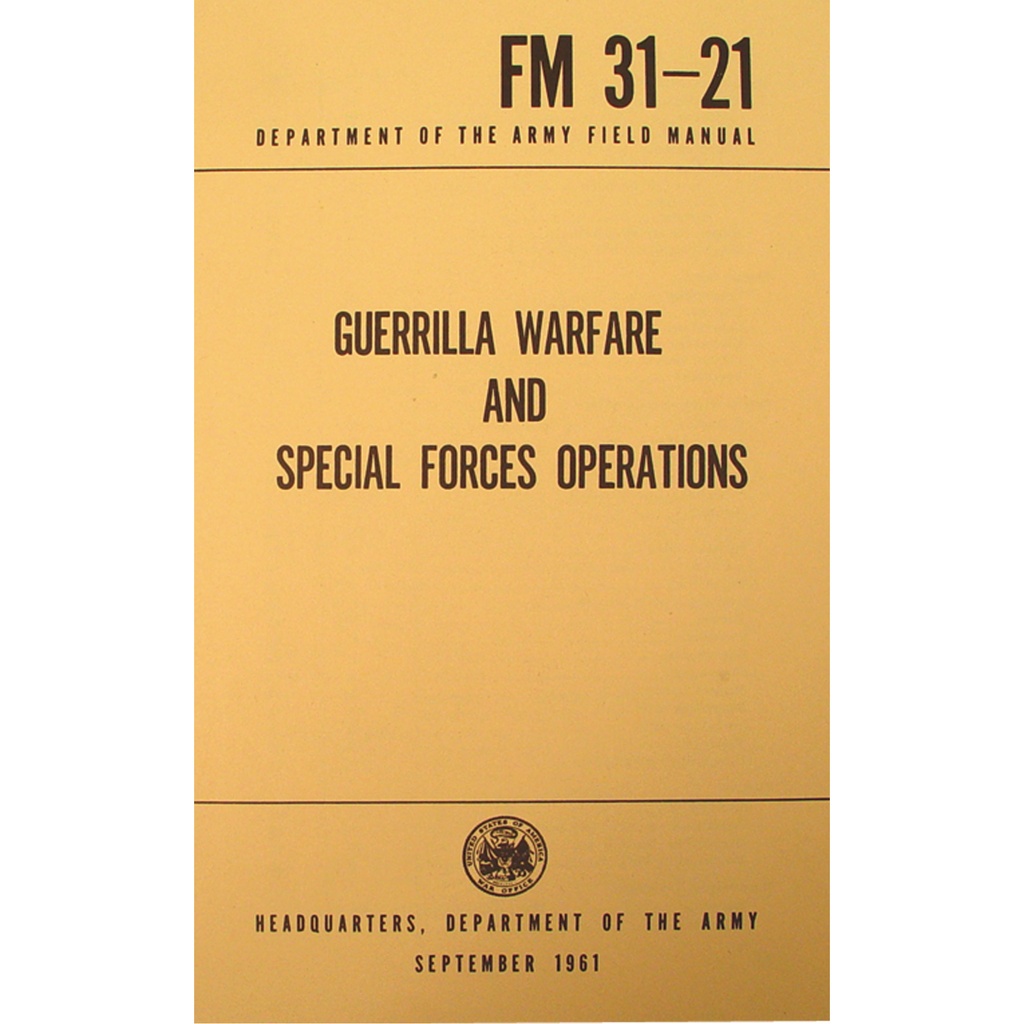
This Cold War Doctrine Special Forces Field Manual is a straight reprint of the 1961 U.S. Army FM 31-21 on guerrilla warfare and Special Forces operations. You get doctrine, not drama—organization, logistics, intelligence, communications, and area command laid out in clean, official language. The bold yellow cover and Army emblem make it a shelf-front draw for retailers and a serious reference for instructors, historians, and tactically minded readers who want the original source, not someone’s summary.
What This Special Forces Field Manual Actually Is
This is a faithful reprint of the 1961 U.S. Army FM 31-21, titled Guerrilla Warfare and Special Forces Operations. It isn’t a coffee-table tribute or a dramatized history—it's the actual Cold War doctrine that shaped how U.S. Special Forces thought about unconventional warfare. If you care about how modern small-unit and irregular warfare concepts evolved, you’re holding primary source material, not commentary.
Written before marketing language crept into the tactical world, the manual is blunt, structured, and focused on what works: organization, command, logistics, intelligence, communications, and the realities of running guerrilla and counter-guerrilla operations in the field.
Why This Cold War Doctrine Manual Still Matters
Doctrine ages, but core principles of planning, control, and human behavior under pressure don’t. This field manual gives you a snapshot of U.S. Army Special Forces thinking at the height of the Cold War, when unconventional warfare was being systematized from the ground up. That makes it valuable in three ways:
- For instructors: A clean framework for building lessons on organization, mission planning, and area command.
- For historians: A primary document that reveals what the Army expected its Special Forces to know and do, not what later authors claim they did.
- For tactically minded readers: A way to trace how modern small-unit, insurgency, and counter-insurgency concepts took shape.
You see where many current "advanced" ideas came from—and where they were more cautious, methodical, and realistic than some modern training content.
Inside the Manual: How It Organizes Guerrilla Warfare and Special Forces Operations
The strength of this book is its structure. Instead of dramatic case studies, it walks systematically through the problem of running guerrilla and Special Forces operations in real environments. Expect clear, outline-style doctrine rather than narrative.
Core Sections and Doctrinal Focus
- Fundamentals: Definitions, roles, and the basic concepts behind guerrilla warfare and Special Forces support.
- Organization and Control: How to structure forces, assign responsibilities, and maintain control in fluid, contested environments.
- Logistics: Realistic treatment of supply, movement, and sustainment when you do not own the terrain or supply routes.
- Intelligence: Collecting, assessing, and using information where formal intel channels are limited or compromised.
- Communications: Maintaining reliable, disciplined communication without drawing unnecessary attention or losing coordination.
- Area Command: How to manage operations spread across a region, not just a single patrol or mission.
The language is plain, the diagrams (where present) are utilitarian, and the mindset is unmistakably that of professionals planning for long-term, high-risk campaigns—not quick, cinematic raids.
Build Quality and Format: A Manual Meant to Be Used
Form matches function here. This isn’t a deluxe collector’s hardcover; it’s a practical softcover designed to be read, referenced, highlighted, and carried.
Field-Ready Physical Design
- Softcover binding: Flexible enough to lie open on a table, range bench, or classroom desk without fighting the spine.
- Matte yellow cover: High-visibility, no-glare surface that is easy to spot in a stack and easy to read under bright light.
- Legible black text layout: The original institutional typography is clean and direct—no decorative fonts, just clarity.
The bold yellow cover with the U.S. Army emblem communicates exactly what this is from across the room: an official-style field manual with real doctrinal content inside. Retailers get a title that catches the eye; instructors and serious readers get a reference that invites actual use.
Who This Manual Serves Best
- Instructors and trainers: Use the manual as a backbone for lessons on planning, logistics, and command in complex environments.
- Military enthusiasts and collectors: Add an authentic Cold War doctrine piece to a library of manuals, not just another modern re-interpretation.
- Students of strategy and security: Compare historical doctrine with current practice to see what’s changed—and what hasn’t.
If you teach, study, or work around security, irregular warfare, or small-unit planning, this gives you the original doctrinal language to push off from.
Using the Manual: Practical Ways to Get Value from It
This book rewards deliberate reading and structured application more than casual flipping. A practical way to use it:
- Read one doctrinal section at a time, not the whole book in a rush.
- Summarize each section in your own words, focusing on what the Army was solving for.
- Compare with modern practice: Note where current doctrine, training, or real-world examples align—or diverge—from this 1961 perspective.
- Turn doctrine into scenarios: Instructors can lift outline points straight into tabletop exercises, discussion prompts, or planning drills.
The goal isn’t to recreate 1961 doctrine uncritically; it’s to understand the logic behind it and use that understanding to sharpen how you think about unconventional operations today.
What People Ask Before Buying a Stun Gun for Protection
How effective are stun guns for self defense?
Effectiveness depends on three factors: access, contact, and intent. A stun gun for self defense has to be carried where you can reach it quickly, applied directly to an attacker’s body, and used long enough for the current to disrupt muscular control and pain tolerance. In real self-defense scenarios, stun guns work best as part of a broader plan: awareness, distance management, and a clear exit, not as a magic one-touch solution.
Does voltage or amperage matter more in a stun gun?
Voltage is largely marketing; amperage and contact time matter far more. High voltage lets current arc across small air gaps, which is why you see and hear a crackle. But the physiological effect on an attacker is driven by how much current (amperage) actually flows through their tissue, how large the contact area is, and how long you maintain contact. When you evaluate a stun gun for self defense, prioritize build quality, battery performance, and ergonomic design over inflated "million volt" numbers.
Is this stun gun legal to carry in my state?
Stun gun laws vary widely by state and sometimes by city. Some jurisdictions treat a stun gun like any other self-defense tool; others require permits, restrict carry locations (schools, government buildings), or ban certain models. Before you carry a stun gun for personal protection, check your state code and local ordinances, and confirm whether there are age limits, licensing rules, or transport requirements. When in doubt, consult official state resources or an attorney familiar with weapons law.
Closing: A Clear-Eyed Addition to Any Serious Library
The Cold War Doctrine Special Forces Field Manual - Yellow Cover does what good reference material should do: it gives you unfiltered doctrine in a format you can actually use. No hype, no dramatization—just the U.S. Army’s own 1961 framework for guerrilla warfare and Special Forces operations.
Whether you’re teaching, studying, collecting, or simply working to understand how modern unconventional warfare thinking evolved, this manual earns its space on the shelf. It’s a compact, honest snapshot of an era when doctrine was written for practitioners who might have to use it the hard way, and that practicality still translates today.