Eagle & Anchor Doctrine Rifle Manual - White Cover
3 sold in last 24 hours
A Marine Corps technical manual belongs in every kit where clarity under pressure matters. The Eagle & Anchor Doctrine Rifle Manual distills USMC-style M16A2 maintenance into clean black-and-white diagrams, step-by-step procedures, and field-proven checks that translate into action fast. Lightweight and packable, it fits in a range bag, ruck, or armorer’s bench and gives shooters a disciplined, repeatable process for keeping a 5.56mm rifle serviceable when conditions are far from ideal.
What This USMC Doctrine Rifle Manual Actually Does
The Eagle & Anchor Doctrine Rifle Manual is not a coffee table book or gun culture decoration. It’s a U.S. Marine Corps–style technical manual focused on organizational and intermediate maintenance for the 5.56mm M16A2 rifle. Where a typical "how-to" guide might offer tips and opinions, this book gives you doctrinal procedures: the exact kind of step-by-step checks, inspections, and service tasks that keep a fighting rifle reliable when lives depend on it.
If you’re the person friends or teammates expect to keep gear running, this manual is written for you. Clear diagrams, technical callouts, and logically tabbed sections make it a working reference you can actually use at a bench, in a classroom, or in the field.
How This Rifle Technical Manual Is Structured
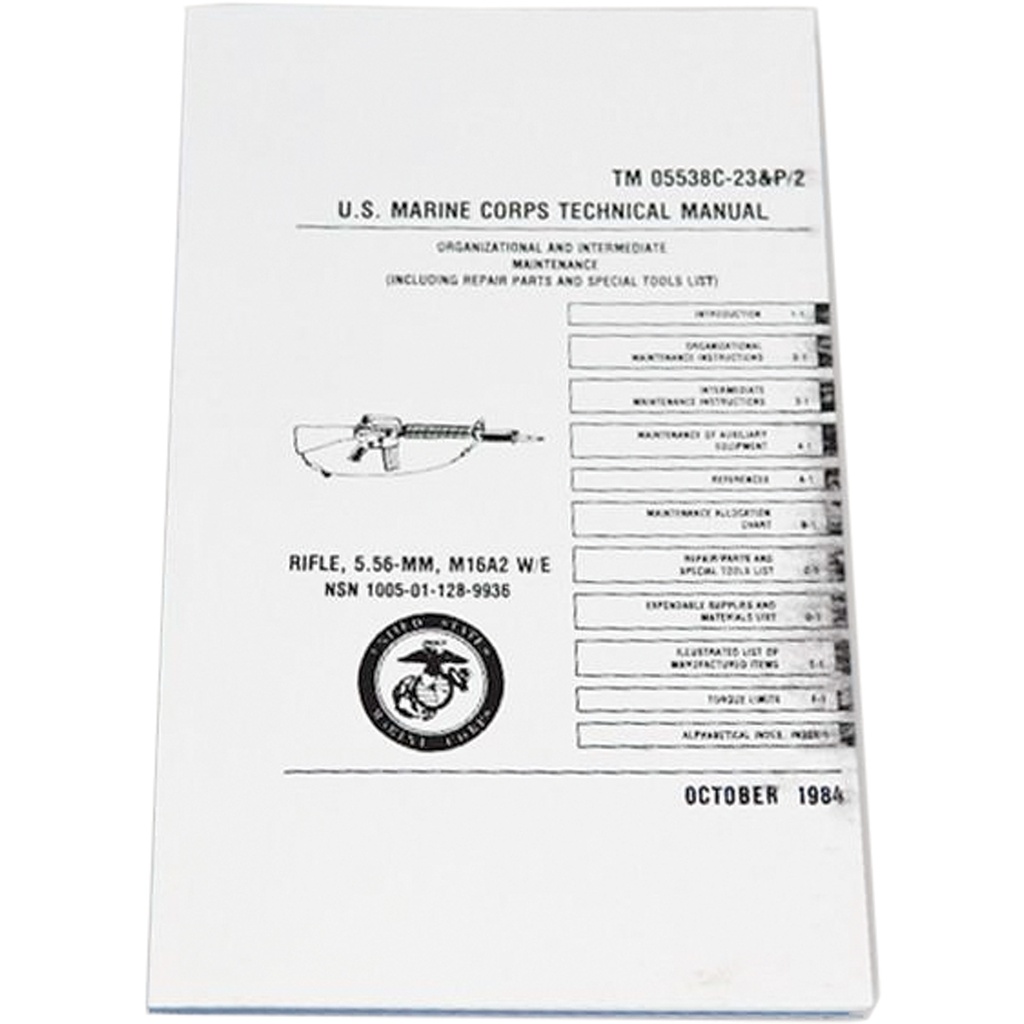
Unlike narrative books, this USMC-style technical manual is built as a tool. The white cover with black text, line-art M16A2 diagram, and vertical tab indicators aren’t design flourishes—they signal that everything inside is organized for fast access under pressure. Sections are broken down so you can quickly find:
- Identification data and component overviews
- Operator and organizational level checks and services
- Intermediate maintenance tasks and troubleshooting
- Parts, assemblies, and reference diagrams
The content is black-and-white, which matters more than most people realize. High-contrast diagrams reproduce cleanly, are easier to see under poor light, and avoid the visual clutter that creeps into full-color layouts. In practice, that makes this rifle manual more effective at one thing: turning complex mechanical systems into clear, repeatable steps.
Why Serious Shooters Value This Kind of Doctrine Manual
Most rifle owners learn maintenance from a mix of YouTube, range buddies, and whatever the manufacturer included in the box. That can work, but it’s inconsistent. A doctrine-based rifle manual like this one does something different: it sets a standard. The U.S. Marine Corps doesn’t treat weapon maintenance as a suggestion; it treats it as part of combat readiness. This book reflects that mindset.
For instructors, armorers, and serious civilian shooters, that matters. You’re not guessing whether you’ve done “enough” to keep a rifle in serviceable condition—you’re following a structured process that has been fielded, refined, and stress-tested in real-world environments. That’s why many preparedness-focused buyers keep at least one technical manual in each kit: it gives them a reference that doesn’t depend on memory, connectivity, or the last video they watched.
Build, Format, and Field-Use Details That Matter
Clean, Legible Layout for Bench and Field Use
The matte white cover and black print aren’t about style points. They support legibility and ease of marking. You can pencil in notes, highlight recurring issues, or flag critical procedures with tabs without fighting glossy glare. Inside, the black-and-white line art is stripped of distractions, so each diagram does exactly what it should: help you see how parts relate and how procedures should look at each step.
Packable Size for Kits, Rucks, and Range Bags
This isn’t a massive hardbound reference that lives on a shelf. It’s a softcover technical manual sized so it can ride in a ruck, glove box, or range bag without dominating your loadout. That packability changes how you use it. Instead of being a book you mean to read "someday," it becomes a tool you can actually open next to the rifle when an issue appears. That’s the same logic behind keeping a tourniquet in your kit instead of just knowing how one works in theory.
Where This Manual Fits in a Protection and Readiness Setup
While this book is not a stun gun for self defense or a direct personal protection tool, it does belong in the same mental category: equipment you choose because you want your defensive tools to work when you need them. Just as a practical buyer will research amperage, contact time, and reliability instead of chasing “million-volt” stun gun claims, a serious rifle owner will reach for a doctrine-based technical manual instead of relying on guesswork.
In a broader protection plan, this manual supports:
- Home defense readiness—making sure your rifle is functional, inspected, and maintained
- Training environments—standardizing how students handle and care for a platform patterned on the M16A2
- Preparedness kits—keeping a hard-copy reference where connectivity isn’t guaranteed
The same mindset that drives someone to select the best stun gun for personal protection—prioritizing reliability, proven design, and real-world effectiveness—translates naturally into keeping a formal maintenance guide for their primary long gun.
Doctrine Over Hype: Why This Style of Manual Still Matters
Self-defense and firearms markets are full of big claims—more lumens, more volts, more accessories. In practice, what keeps you safer is not an extra marketing bullet point, but the quiet, unglamorous work of making sure core tools function on demand. That’s what this rifle technical manual supports.
Instead of glossy photos and slogans, you get structured procedures, exploded diagrams, and maintenance schedules. Instead of shortcuts, you get checklists that force you to confirm that critical details are handled. That’s the same philosophy a good instructor brings to teaching stun gun for self defense use: focus on what actually works under stress, cut what doesn’t, and make sure the user can reproduce the process when adrenaline is high.
What People Ask Before Buying a Stun Gun for Protection
Many buyers looking at this manual are also researching a stun gun for personal protection or other defensive tools. The questions they ask tend to cluster around real effectiveness, not marketing language. These are the same practical concerns a disciplined shooter brings to rifle maintenance—and answering them honestly builds better decisions across all your gear.
How effective are stun guns for self defense?
A stun gun can be effective for self defense, but only when you understand its limits. It’s a close-contact tool, not a magic "drop them instantly" device. The real factors are amperage (current), quality of contact, and how long you can maintain that contact on target areas. A solid stun gun for self defense is best used as part of a larger plan: awareness, distance management, and a clear idea of when and how you’re willing to engage. Treat it like any other defensive tool—train with it, understand what it can and can’t do, and don’t let it be your only strategy.
Does voltage or amperage matter more in a stun gun?
Voltage gets the headlines, but amperage does the work. High voltage helps the charge arc through clothing and across small air gaps, but it’s the amount of current delivered into the body—combined with contact time and contact area—that drives actual effect. Many advertised "million-volt" numbers are more marketing than meaningful data. When you evaluate a stun gun, prioritize build quality, amperage, battery performance, and ergonomics that let you keep solid contact under stress. That approach mirrors why serious rifle owners care more about proper maintenance procedures than flashy parts lists.
Is this stun gun legal to carry in my state?
Stun gun laws vary widely by state and sometimes by city. Some locations treat them like simple defensive tools; others require permits, restrict carry in certain places, or ban them outright. Before you buy or carry any stun gun for self defense, check your state statutes and local ordinances, not just generic internet summaries. Look for terms like "electronic control device," "conducted energy device," or "stun gun" in the code. The same disciplined mindset you’d use to verify technical data in a rifle manual applies here: go to the source, confirm the details, and when in doubt, consult an attorney or local law enforcement guidance.
Carrying Knowledge Like You Carry Gear
A well-maintained rifle or a carefully chosen stun gun for self defense both come down to the same principle: don’t outsource your safety to marketing. The Eagle & Anchor Doctrine Rifle Manual gives you a concrete, written standard for keeping a 5.56mm M16A2-pattern rifle in serviceable condition. You can reference it, teach from it, and hand it to someone else knowing they’ll get more than opinions—they’ll get procedures.
Pairing this kind of doctrine-based reference with thoughtfully selected defensive tools creates a different kind of readiness. Instead of hoping your gear works, you know how to keep it working. Instead of assuming a new stun gun will "handle it," you understand how to deploy it, what it can’t do, and where it fits in your overall plan. That quiet, informed confidence is worth more than any bold claim on a package—and it’s exactly what manuals like this are built to support.