Field Doctrine Survival Training Manual - Signal Yellow
10 sold in last 24 hours
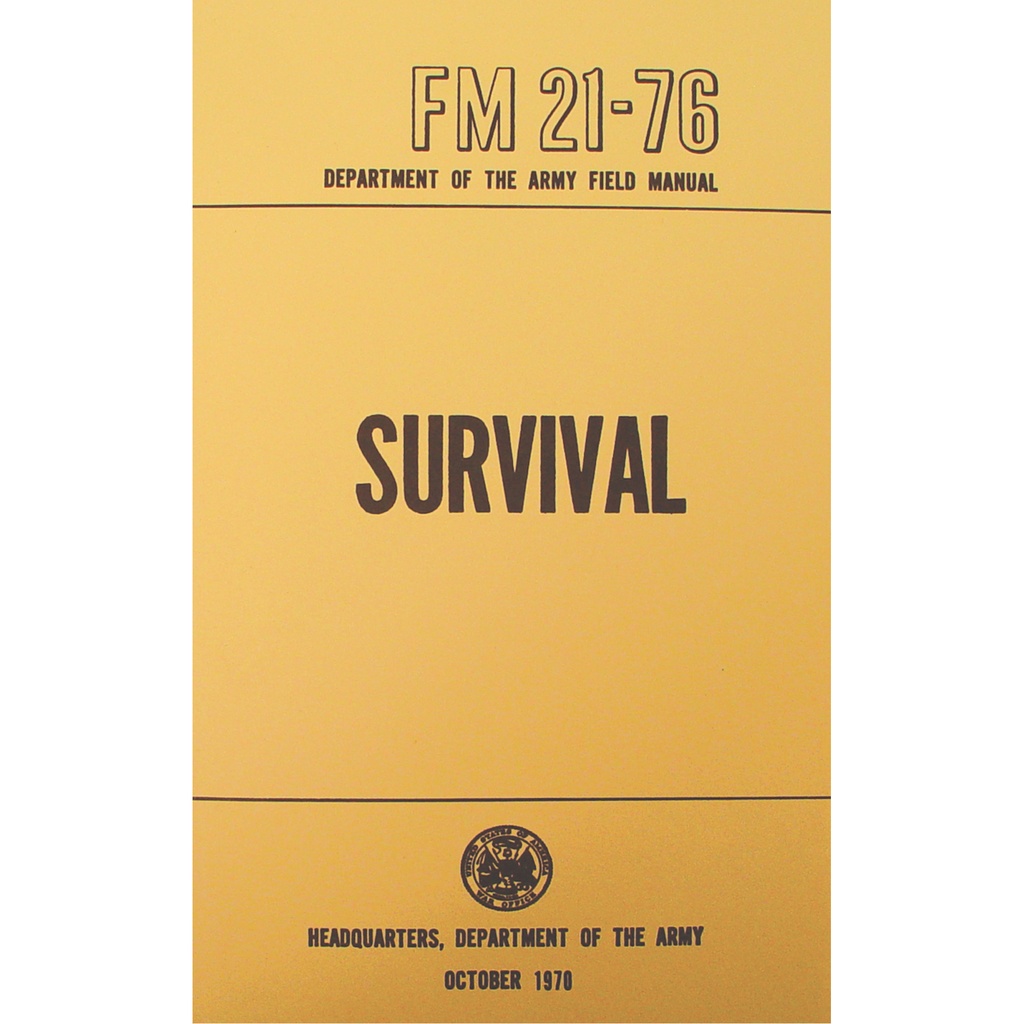
This survival manual is a straight reprint of the 1970 U.S. Army FM 21-76—kept honest in its original, no-drama format. Navigation, water, food, firemaking, and survival in special areas are laid out in the same practical, field-tested structure soldiers used for real-world training. The signal yellow cover is easy to spot in a pack or glove box, and the content stays focused on what works when conditions turn against you. Ideal as a training reference or a compact addition to any serious survival kit.
What This Survival Manual Actually Does for Your Preparedness
The Field Doctrine Survival Training Manual - Signal Yellow is a faithful reprint of the 1970 U.S. Army FM 21-76, built for the same job it had in service: turn unfamiliar terrain and changing conditions into a workable plan. There’s no marketing fluff, no exaggerated “tactical” claims—just structured, field-proven survival doctrine you can actually train with and apply.
If you’re building a real-world survival kit or teaching others, this manual gives you a clear, systematic framework for staying alive: how to think, how to prioritize, and what to do when food, water, shelter, and navigation are suddenly on you—not on infrastructure.
Inside the Field Doctrine Survival Training Manual
Because this is a direct FM 21-76 reprint, the content is organized the way the Army trained soldiers to think under stress. That structure is the real value: you get a complete survival workflow instead of random tips.
Navigation: Finding Your Way Without Guesswork
The navigation sections break down how to move and orient when you don’t have GPS or when electronics fail. Expect clear instruction on map and compass use, terrain association, and practical route selection—designed for people who might be cold, tired, and under pressure, not sitting at a desk.
Water, Food, and Fire: Core Survival Priorities
FM 21-76 spends real time on water—where to find it, how to make it safe, and how to manage it over time. Food and foraging are covered with the same methodical approach: what to prioritize, what to avoid, and how to think about calories in a realistic way.
Firemaking and cooking content focus on process, not gimmicks: how to build, protect, and maintain a fire in different conditions using what’s actually around you. It’s written for people who may not have the perfect gear when things go wrong.
Why This Specific Survival Manual Still Matters
There are endless modern survival books, but most either dramatize disaster or bury you in theory. This survival manual is different because its job was to prepare soldiers to operate without support, using principles that don’t age just because tech changes.
Three things make this reprint worth carrying:
- Battle-tested framework: It reflects doctrine refined through real-world use, not internet speculation.
- Clear priority setting: It helps you decide what to do first, second, and third instead of trying to do everything at once.
- Trainable content: Sections can be turned directly into training drills, field exercises, and checklists.
Signal Yellow Cover: Easy to Find When It Matters
The signal yellow cover isn’t an aesthetic choice—it’s a practical one. In a cluttered pack, glove box, or field kit, this manual stands out immediately. You don’t waste time digging for it when you’re already dealing with bad weather, low light, or stress.
Field-Friendly Format and Layout
The minimalist cover and simple interior layout echo the original military design: text-first, distraction-free, and easy to reference. It’s compact enough to ride in a pack without competing for space with core gear, but substantial enough to serve as your primary survival reference in camp or training.
How to Use This Survival Manual Effectively
A survival manual is only as useful as the way you work with it. Treat this one as a training partner, not just a book you throw in a bag.
- Pre-load your brain: Read key sections on navigation, water, and shelter before you need them. Under stress, you’ll recall frameworks you’ve already seen.
- Turn chapters into drills: Use the guidance on firemaking, route planning, and resource use to design simple weekend field exercises.
- Build your kit around doctrine: Let the manual’s priorities inform what actually earns a spot in your pack, rather than packing by guesswork or trends.
- Teach and standardize: If you’re responsible for others—family, students, or a team—this gives you a common reference so everyone is operating from the same playbook.
Where This Manual Fits in a Real Preparedness Setup
This isn’t a coffee-table book; it’s a working tool. The Field Doctrine Survival Training Manual - Signal Yellow fits best in:
- Personal go-bags and vehicle kits: A compact, high-visibility reference that doesn’t rely on batteries.
- Training and instruction: Survival instructors and group leaders can use it to structure courses and field days.
- Home preparedness libraries: As a baseline survival reference you can hand to someone and say, “Start here.”
- Outdoor and bushcraft progression: Use the doctrine as a backbone, then layer your own experience on top of it.
Why an Older Army Manual Still Holds Up
Survival’s fundamentals—heat loss, dehydration, navigation, decision-making under stress—have not changed since 1970. What’s different now is the gear we carry and the expectations we’ve built around convenience. This manual forces you back to core principles:
- How to observe your environment logically
- How to prioritize actions when you can’t do everything
- How to conserve energy and resources over time
- How to handle survival in different climates and terrains
That mindset is what keeps this content relevant, even if some specific tools or examples feel dated. You’re getting doctrine-level thinking, which adapts easily to modern gear.
What People Ask Before Buying a Survival Manual Like This
How detailed is this survival manual compared to modern books?
This manual is more systematic than many modern survival books. Instead of scattered tips, it gives you a complete survival structure: mental approach, priorities, navigation, water, food, fire, and survival in special areas. It doesn’t cover every modern gadget, but it gives you a framework that works even when gadgets fail.
Is the information still relevant if it was written in 1970?
Yes, because the underlying problems—staying warm, hydrated, oriented, and functional—haven’t changed. You may choose updated tools (modern filters, stoves, materials), but the manual’s decision-making and fieldcraft remain solid. Think of it as learning fundamentals from a source that was written for people whose lives depended on applying it.
Is this a good first survival book for someone new to preparedness?
For someone who prefers structured, practical information over sensational stories, this is an excellent starting point. It assumes you’re serious about learning, walks you through fundamentals, and gives you enough detail to start training skills—not just thinking about them. Pair it with hands-on practice and you’ll be far ahead of most casual “prepper” reading.
Can I use this manual to teach others?
Yes. Its field-manual format is ideal for building lesson plans, training days, and simple exercises. You can assign sections to read, then run drills based on those chapters—navigation exercises, firemaking standards, water sourcing, and shelter practice. Everyone’s working from the same reference, which makes communication and feedback much easier.
Where should I store or carry this manual?
Think of it as a tool that should live where problems are most likely. Common choices: one copy in a home reference spot with other vital manuals, another in a primary go-bag or vehicle kit. The signal yellow cover makes it easy to locate fast in a crowded pack or trunk if you need to hand it to someone else in a hurry.
Bottom line: the Field Doctrine Survival Training Manual - Signal Yellow doesn’t try to impress you with theatrics. It gives you disciplined, field-ready survival doctrine in a format you can train with, teach from, and trust when conditions stop being friendly.