Field-Proven Army Rigging Guide Manual - Signal Yellow
10 sold in last 24 hours
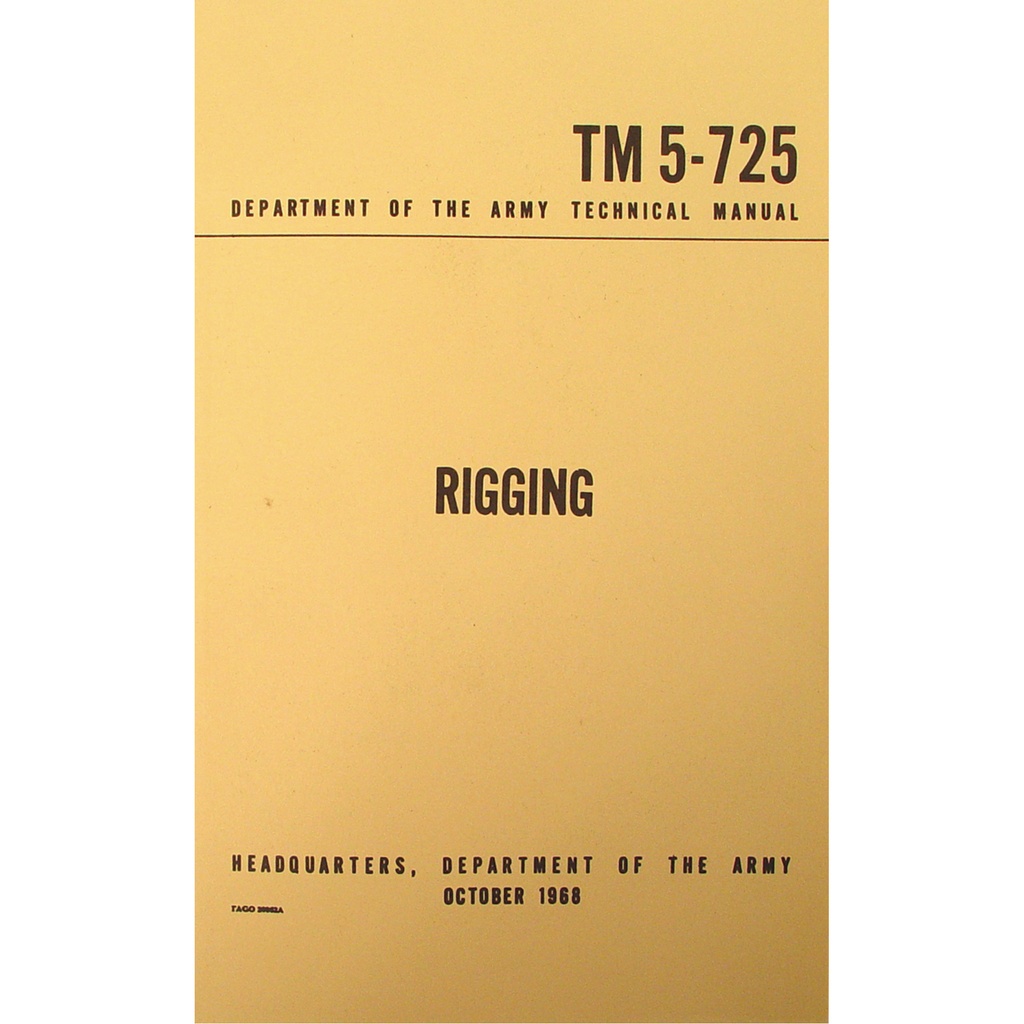
This field‑proven rigging manual is a faithful 1968 Army technical reprint that turns complex lifts into clear, repeatable steps. Wire rope, chain, fiber rope, knots, hitches, splices, and safe‑load calculations are laid out like a mentor is looking over your shoulder. The signal‑yellow softcover stays visible on busy shop floors and job sites, while the no‑nonsense military layout keeps crews focused on what matters: reliable, safe rigging decisions when the load—and the schedule—are both on the line.
What This Field-Proven Rigging Manual Actually Does
This 1968 Army technical manual reprint is not a glossy overview or a theoretical textbook. It is a working rigging manual designed to guide real-world lifts with wire rope, chain, and fiber rope. The signal-yellow cover exists for one reason: so crews can find it fast when they need numbers, not opinions. Inside, the content reads like a seasoned rigger walking you through every step—how to choose the right gear, how to apply safe-load factors, and how to keep rigging decisions consistent across the whole team.
How This Rigging Manual Is Organized for Real Work
Because this is a Department of the Army technical manual, the structure is built for field use—not for academic coursework. Information is layered so someone on a shop floor, in a training room, or at a job site can move quickly from concept to action.
Wire Rope, Chain, and Fiber Rope Made Comparable
The manual breaks down wire rope, chains, and fiber rope in a way that lets you compare options side by side. You get the essential data you’d expect from a rigging reference—strength, construction types, and limitations—along with the practical rules for when each is appropriate. The result: fewer guesses, more repeatable choices.
Knots, Hitches, and Splices with Clear Purpose
Rather than presenting knots as a collection of tricks, this manual connects knots, hitches, and splices directly to their intended rigging tasks. You see when to use a particular hitch pattern, how a splice affects strength, and what matters most in maintaining integrity under load. It’s the kind of explanation that supports both training new hands and refreshing experienced crews.
Safe-Load Calculations That Demystify the Numbers
One of the most valuable functions of this rigging manual is how it approaches safe-load calculations. Instead of burying you in formulas, it walks you through quick ways to get to safe answers. The focus is on practical rigging math—how angles affect load on each leg, how to read tables correctly, and how to avoid the common shortcuts that erode your safety margin over time.
From Tables to Decisions, Not Just Data
The safe-load tables are there, but the strength of this manual is that it teaches you how to use them. It cues you to the questions that matter: Is this angle increasing tension beyond what the tag says? Are we accounting for the weakest link in the system? That shift—from raw data to applied decision-making—is what turns a technical manual into a genuine rigging standard.
Why a 1968 Army Rigging Manual Still Works Today
Rigging physics have not changed since 1968. Loads still respond to gravity the same way. Angles still multiply forces. What has changed is how distracted most work environments have become. This manual’s military layout is refreshingly focused: black text, clear headings, and content tuned for hands-on use.
Field-Proven Clarity for Training and Refreshers
In training rooms, this manual anchors classroom discussions in a shared standard. On shop floors and in the field, it becomes the tie-breaker when two experienced people disagree on a detail—wire rope size, hitch choice, or how conservative a safety factor should be. Because it is an official Army technical manual, it brings an external, respected reference into those discussions.
Carry and Use: How This Manual Fits Into Your Workflow
The softcover, signal-yellow design is intentional. It is thin and light enough to live in a job box, gang box, or on a training desk, but tough enough to survive repeated reference. The bright yellow cover stands out in busy industrial spaces, making it easy for crews to grab it when a lift plan stalls on a question.
On the Shop Floor
On shop floors, crews use this rigging manual to standardize how they talk about loads and gear. Instead of each person relying on what they remember from a class years ago, they can open to the relevant section and confirm the right rope, chain, hitch, or safe-load figure. Over time, that habit builds a shared language of rigging safety.
In Training Rooms and Tailgate Talks
For trainers, the manual doubles as a curriculum backbone. Sections on knots, hitches, and splices provide a clean progression from basic concepts to more advanced rigging setups. Quick references on safe-load calculations support short toolbox or tailgate safety talks, reinforcing principles before complex or unusual lifts.
What People Ask Before Buying a Rigging Manual
Is an older Army rigging manual still relevant to modern work?
Yes, because the fundamentals of rigging—load paths, angles, material behavior, and safety factors—do not change over time. Modern gear may offer new hardware or coatings, but the core principles for wire rope, chain, and fiber rope remain consistent. This 1968 Army rigging manual focuses on those fundamentals. Many shops and training programs still rely on these standards precisely because they strip the topic down to physics and procedure, not product marketing.
Is this better for training, or for day-to-day reference?
It serves both roles well. In training, it provides a clear, authoritative baseline so instructors are not building a course from scratch. For day-to-day reference, its tables, diagrams, and stepwise explanations support quick checks when planning or executing lifts. The format makes it easy to flip directly to the relevant section—wire rope, chains, fiber rope, knots and hitches, or safe-load calculations—without wading through unrelated content.
How does this compare to generic safety pamphlets or handouts?
Generic safety pamphlets often summarize rigging risks without giving enough detail to make specific decisions. This rigging manual does the opposite: it arms you with the details you need for practical rigging choices, backed by an established military technical standard. Instead of just warning you about failure modes, it shows you exactly how to set up, calculate, and verify a lift so you can stay well inside the safe zone.
Why This Signal-Yellow Manual Belongs on Your Job Site
When lifts get complicated, teams need more than memory and verbal tradition. They need a shared reference they trust. This field-proven rigging manual gives you that reference—clear guidance on wire rope, chains, fiber rope, knots, hitches, splices, and safe-load calculations, all framed by a no-nonsense Army technical standard. The signal-yellow cover keeps it visible. The content keeps your rigging conversations precise.
Whether you’re building a training library, tightening up shop-floor standards, or giving crews a reliable way to double-check their rigging plans, this manual turns rigging from "what we’ve always done" into a deliberate, documented practice. That’s how smart teams reduce surprises and keep both people and loads where they’re supposed to be.