Archival Ordnance Incendiaries Reference Manual - Yellow Cover
11 sold in last 24 hours
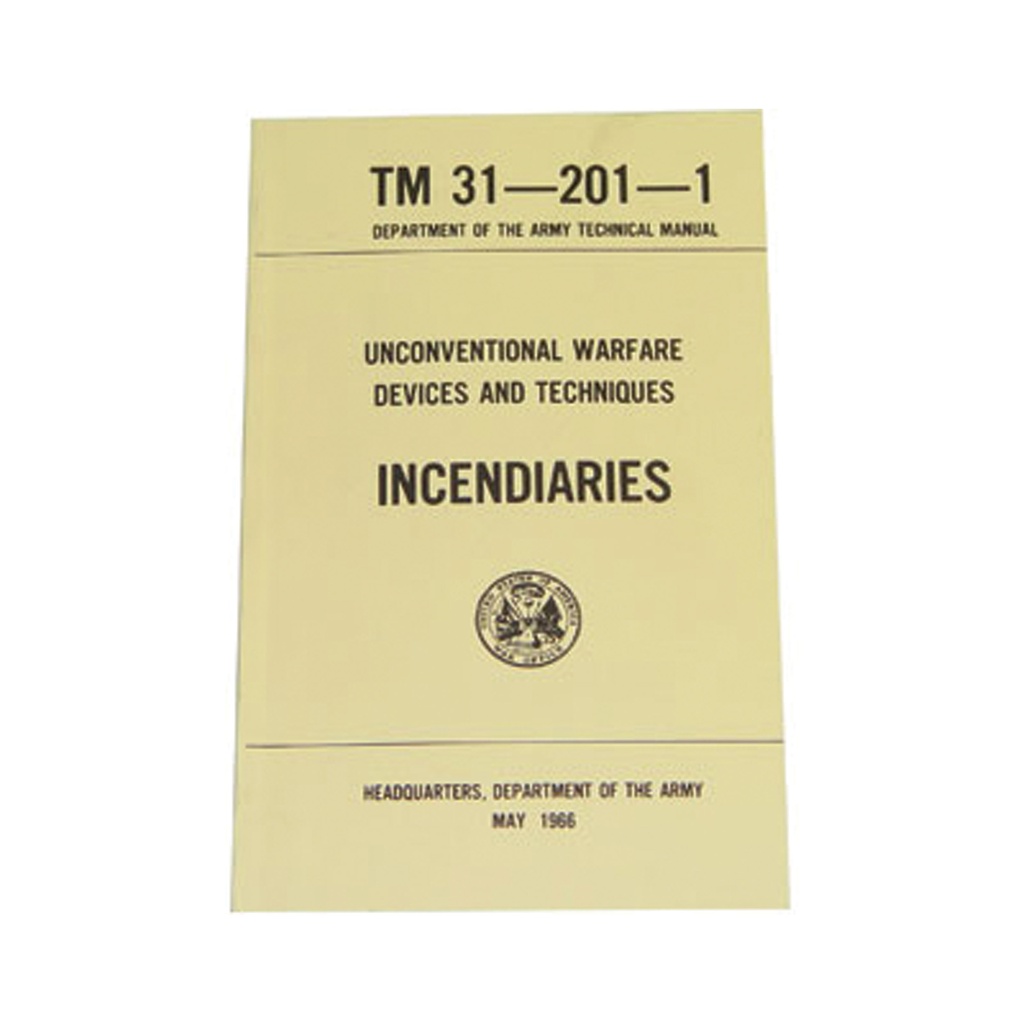
This archival ordnance reference manual is a faithful reprint of a 1966 Department of the Army technical manual on incendiaries and unconventional warfare devices. The yellow cover, TM designation, and official seal signal real field-issue doctrine, not entertainment. Inside you’ll find clear diagrams, structured terminology, and uncompromising military formatting. It’s ideal for historians, professionals, and shops that want a serious technical reference on the shelf—an authentic-looking Army manual that invites careful study and responsible use, not spectacle.
What This Ordnance Reference Manual Actually Is
This is an archival-format Department of the Army technical manual on incendiaries and unconventional warfare devices and techniques, reissued as a yellow-cover field reference. It is not a sensational “how-to” book; it is a serious, structured document that reflects Cold War–era ordnance doctrine. The value here is clarity, authenticity, and organized information for historians, researchers, professionals, and shops that curate credible military references.
Why an Authentic Incendiaries Technical Manual Still Matters
Modern discussions of weapons and self defense often jump straight to hype. By contrast, this ordnance manual is written in the deliberately dry, precise tone of a military field reference. That makes it useful in three ways:
- Historical context: You see exactly how the U.S. Army formalized incendiary and unconventional warfare concepts in May 1966.
- Structured doctrine: Information is broken into logical sections, procedures, and clearly defined terms.
- Professional reference: The layout and content are optimized for quick consultation, not narrative reading.
For anyone who studies ordnance, military history, or doctrine development, this format is far more useful than a generalized overview or popular-history treatment. It shows what was actually briefed and trained.
Inside the Field-Issue Ordnance Format
Open the yellow cover and you are looking at a direct reproduction of an Army technical manual: TM 31-201-1. The typography, layout, and section structure follow the original field-issue style, which is built around clarity under pressure, not design flair.
Field-Optimized Layout and Structure
The internal organization follows the core principles of a technical manual:
- Numbered sections and subsections that let you locate topics quickly.
- Procedural steps presented in ordered lists, minimizing ambiguity.
- Technical terminology defined and used consistently throughout.
This structure makes the book function more like a tool than a casual read. It’s designed for repeated reference, note-taking, and cross-checking against other sources.
Diagrams and Visual Clarity
Where appropriate, the manual uses diagrams and line art to clarify concepts. These are not decorative. They are simple, field-ready illustrations that support the text: sectional views, layouts, and schematic representations of devices and effects. The goal is unambiguous communication, not aesthetics.
Build, Format, and Shelf Presence
Physically, this is a softcover, yellow-field manual–style book. That matters more than it might seem, especially for professionals and retailers who care about how references live on shelves or in kits.
- Softcover flexibility: Easy to stow, stack, and carry, closer to what soldiers historically handled in the field.
- Yellow cover visibility: High-contrast against other volumes; you can spot it quickly in a pile or on a crowded shelf.
- Official insignia: The Department of the Army seal and TM designation immediately communicate that this follows an institutional format.
This combination of authentic styling and practical size makes it equally at home in a professional reference library, a military-history collection, or a curated retail display that favors real technical documentation over props.
Who This Incendiaries Manual Is (and Is Not) For
This book is designed for readers who treat ordnance and unconventional warfare topics as serious subject matter. It is most relevant for:
- Military historians tracing the evolution of unconventional warfare doctrine.
- Defense and security professionals who need historical context for training and policy.
- Educators and librarians building collections on Cold War military documentation.
- Retailers who stock technical, history-focused titles instead of novelty material.
It is not a dramatized account, a cinematic tie-in, or a “coffee-table” book. The tone is clipped and procedural because that’s how a technical manual maintains clarity and accountability.
Responsible Use and Context
Because the subject is incendiaries and unconventional warfare devices, responsible handling matters. This manual is best approached as a historic, doctrinal snapshot and a technical reference for study, not as a set of instructions to improvise. Laws, ethics, and safety standards have evolved significantly since 1966, and any modern professional use must comply with current legal and regulatory frameworks.
Framed correctly, the manual supports:
- Contextual understanding: Placing historic doctrine alongside modern policy and technology.
- Critical analysis: Comparing past assumptions and methods with current best practices.
- Training support: Providing primary-source material in controlled, professional settings.
What People Ask Before Buying a Stun Gun for Protection
Many buyers looking at technical manuals like this are also researching self-defense tools, especially the stun gun for self defense. The questions below address that, using the same no-hype, technical approach this manual represents.
How effective are stun guns for self defense?
A stun gun for self defense can be effective in very specific conditions: close range, solid contact on muscle-rich areas, and enough contact time (often several seconds) to disrupt someone’s ability to continue aggressive action. They are not magic “touch and drop” devices. Their real role is to create an opportunity window—seconds where an attacker’s balance, coordination, or intent is disrupted—so you can break contact and move to safety. Training, awareness, and realistic expectations matter more than any advertised “million volts.”
Does voltage or amperage matter more in a stun gun?
Voltage in stun gun marketing is mostly theater. Once voltage is high enough to jump the small air gap at the contact points, more digits on the package do not equal more real-world stopping power. Amperage—the current delivered through the body—is what actually affects muscle and nerve tissue. Two key factors matter:
- Amperage and waveform: Enough current, delivered in the right pulse pattern, to interfere with normal muscle control.
- Contact time and placement: You must maintain pressure on the body, ideally on large muscle groups, for the device to have effect.
A well-designed, modestly rated stun gun with good current output, reliable contacts, and a solid power source beats a flimsy "10 million volt" gadget every time.
Is this stun gun legal to carry in my state?
Stun gun laws are highly state- and city-specific in the U.S. Some states treat a stun gun for self defense much like other defensive tools, while others restrict possession, sales, or carry (especially in schools, government buildings, or on public transport). The only responsible approach is:
- Check your state statutes by searching for terms like “stun gun,” “electronic control device,” or “conducted energy weapon.”
- Confirm local ordinances, especially in major cities that add their own rules.
- Verify age limits and permit requirements where applicable.
Before carrying any stun gun for personal protection, verify current law from an official source; do not rely solely on packaging claims or secondhand summaries.
From Technical Manuals to Practical Protection
This yellow-cover incendiaries manual and a well-chosen stun gun for personal protection have something in common: both reward people who value real information over marketing. The manual preserves how professionals once documented complex, dangerous topics with precision and structure. A good stun gun, selected with the same clear-eyed mindset—prioritizing build quality, current delivery, and safe carry over voltage headlines—fits the same philosophy.
If your goal is to build a library, a shop selection, or a personal toolkit based on accuracy and responsibility, this archival ordnance reference manual is a solid addition. It tells you, in the Army’s own technical voice, how they framed incendiaries and unconventional warfare devices in 1966—leaving you better informed, more grounded, and better prepared to separate real capability from hype in any protection-related decision you make today.