Guardian Reach Quick‑Deploy Baton - Midnight Black
12 sold in last 24 hours
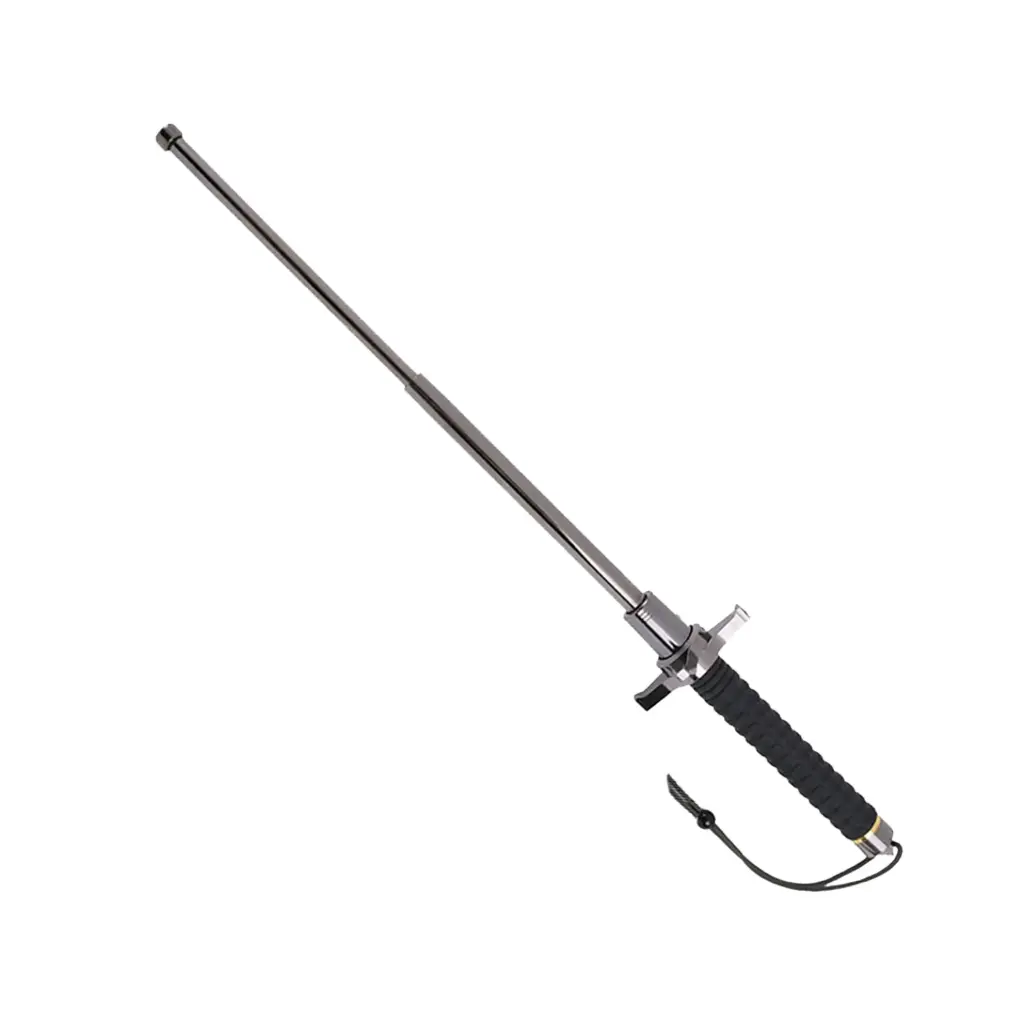
This expandable baton isn’t about intimidation—it’s about controlled distance. Collapsed, the Guardian Reach Quick‑Deploy Baton - Midnight Black rides discreetly at your side. A quick snap extends it to 26 inches, giving you space to manage threats without going hands‑on. The removable hand guard protects your knuckles, while the textured grip and wrist strap help keep it in your hand under stress. For security professionals and prepared civilians, it delivers calm, visible authority in a compact, ready‑to‑deploy tool.
What the Guardian Reach Quick‑Deploy Baton Actually Does
The Guardian Reach Quick‑Deploy Baton - Midnight Black is a simple idea done well: carry small, extend fast, and create distance when you need to manage a threat. Collapsed, it sits quietly on a belt or in a bag. With a quick snap, it locks out to a full 26 inches, giving you reach, leverage, and a clear visual signal that you are not an easy target.
Unlike a stun gun for self defense, this baton doesn’t rely on batteries, voltage claims, or electronics. It’s pure mechanical control: solid metal sections, a textured handle, a removable hand guard, and a wrist strap that helps keep it in your hand when adrenaline spikes. If you want personal protection that works the same way every time you open your hand, this is that kind of tool.
How an Expandable Baton Works for Personal Protection
Expandable batons are built around a telescoping shaft. In this model, three metal sections nest inside each other when collapsed. A sharp, practiced swing uses inertia to extend and lock those sections into a rigid 26-inch baton. To close it, you drive the tip straight down on a firm surface to unlock the friction fit and collapse it back into the handle.
That extra reach is the core of its self-defense value. A stun gun for self defense requires close contact—usually arm’s length or closer. A baton lets you establish a perimeter before someone can put hands on you. It’s about managing space, redirecting aggressive movement, and creating enough time to disengage, call for help, or move to a safer position.
Distance and Presence Over Drama
In real-world protection, just having a visible, extended baton often changes behavior. Security professionals know this: when a 26-inch metal shaft appears in a trained hand, most people reconsider closing the distance. That’s not bravado—that’s simple risk calculation on the other person’s part.
Mechanical Reliability vs. Battery Dependence
Where a stun gun for personal protection depends on charged batteries and internal electronics, this baton depends on gravity, friction, and steel. There’s no “is it charged?” moment. If you can move your arm, you can deploy it. For people who don’t want to manage charging routines but still want a dedicated self-defense tool, that simplicity matters.
Build Quality That Holds Up Under Stress
Protection tools fail in very predictable ways: poor grips slip, cheap hardware bends, and accessories break right when you need them. This baton’s design addresses those failure points directly.
Removable Hand Guard for Knuckle Protection
The cross-style guard at the top of the handle does a quiet but important job: it helps shield your knuckles and hand from direct impact or wild swings. If you do end up making contact, the guard gives you a bit of margin between what you’re striking and the most fragile bones in your hand.
It’s also removable. If you prefer a lower-profile baton for tighter carry or specific duty setups, you can run it without the guard. That kind of modularity is what a lot of security and patrol users look for.
Textured Grip and Wrist Strap for Retention
A baton you can’t keep in your hand is a baton that just armed someone else. The textured cylindrical handle is designed to stay put even when your palms are sweaty or you’re wearing light gloves. The wrist strap adds another layer of retention, especially useful if you’re moving quickly, dealing with crowds, or operating in poor lighting where fine motor skills are not at their best.
Carry Reality: How This Baton Fits Into Your Day
A good self-defense tool has to fit actual life, not just a range scenario. Collapsed, this baton is compact enough for belt, bag, or vehicle carry. It doesn’t scream for attention when stowed, but once deployed, the metallic silver shaft and cross guard send a very clear message.
For security professionals, it supports the same core role as other duty batons: presence, control, and a step between verbal commands and more serious force. For prepared civilians, it can be part of a layered protection approach—paired with awareness, clear boundaries, and, where appropriate, other defensive tools like pepper spray or a stun gun for self defense.
Comparing This Baton to a Stun Gun for Self Defense
Many people compare batons and stun guns when choosing the best stun gun for personal protection or a better overall tool. Each has a different job:
- Range: A baton works at arm’s length and beyond; a stun gun must make direct contact with an attacker’s body.
- Dependence on power: A stun gun needs charged batteries and working electronics; this baton is purely mechanical.
- Skill demand: A stun gun for self defense requires you to target specific areas and maintain contact long enough to matter; this baton focuses on range, posture, and simple, gross-motor movements.
- Perception: The visible presence of a baton often de-escalates situations early; a stun gun’s effect is only obvious once it’s used.
If you already carry or are considering a stun gun for self defense, this baton can complement it by giving you a non-electronic, distance-focused option that doesn’t care about amperage, voltage, or battery life.
What People Ask Before Buying a Stun Gun for Protection
How effective are stun guns for self defense?
Stun guns can be effective, but only when used realistically. They’re contact tools, not magic wands. To disrupt someone, you need:
- Enough current (amperage) to matter
- Firm contact on the attacker’s body
- At least a second or two of continuous contact
They often work best as a pain and distraction tool that lets you create an opening to escape. They are less reliable against highly motivated, intoxicated, or adrenaline-charged attackers. That’s why many professionals treat a stun gun for self defense as one layer in a broader protection plan, not the only answer.
Does voltage or amperage matter more in a stun gun?
Voltage sells boxes; amperage stops people. Those “5 million volt” and “20 million volt” labels are mostly marketing theater. Past a certain point, higher voltage mainly helps the stun gun arc through clothing and into the skin—it doesn’t automatically increase stopping power.
What actually counts is amperage (current) and how long you keep contact. Even a modest-voltage unit with solid current and good electrode contact can be more effective than a flashy “high-voltage” device with weak current output. When you shop for the best stun gun for personal protection, look for honest manufacturers who talk about current, contact time, and build quality—not just huge voltage numbers.
Is this stun gun legal to carry in my state?
Stun gun and baton laws vary widely by state and sometimes by city. Some states treat a stun gun for self defense like any other defensive tool for adults; others restrict carry, require permits, or ban them in certain locations (schools, government buildings, etc.). Batons can be more restricted than stun guns in some jurisdictions.
Before you buy or carry either a stun gun or an expandable baton like this one, check three things:
- Your state laws on defensive weapons, impact weapons, and electronic control devices
- Any local city or county ordinances that add extra rules
- Policies from your employer or property managers (for workplaces, campuses, and apartments)
When in doubt, read the actual statute language on an official state site or talk to a qualified local attorney. Online summaries are a starting point—not the final word.
Carrying With Confidence: Putting It All Together
Whether you choose a stun gun for self defense, this Guardian Reach Quick‑Deploy Baton, or both, the real advantage isn’t the tool—it’s your preparation with it. Know how it deploys. Practice the motion. Understand when you’re legally justified to show it and when you’re justified to use it.
This baton gives you three very practical advantages: distance, visible presence, and mechanical reliability. No charging cycles, no worrying about voltage claims, no wondering if a battery sat too long. When you extend it, you know exactly what it will do: create space and give you a solid, controlled way to manage that space.
Carried thoughtfully and practiced a bit, it becomes part of a calm, competent personal protection plan—not a lucky charm. That’s the difference between owning a tool and being prepared to use it.