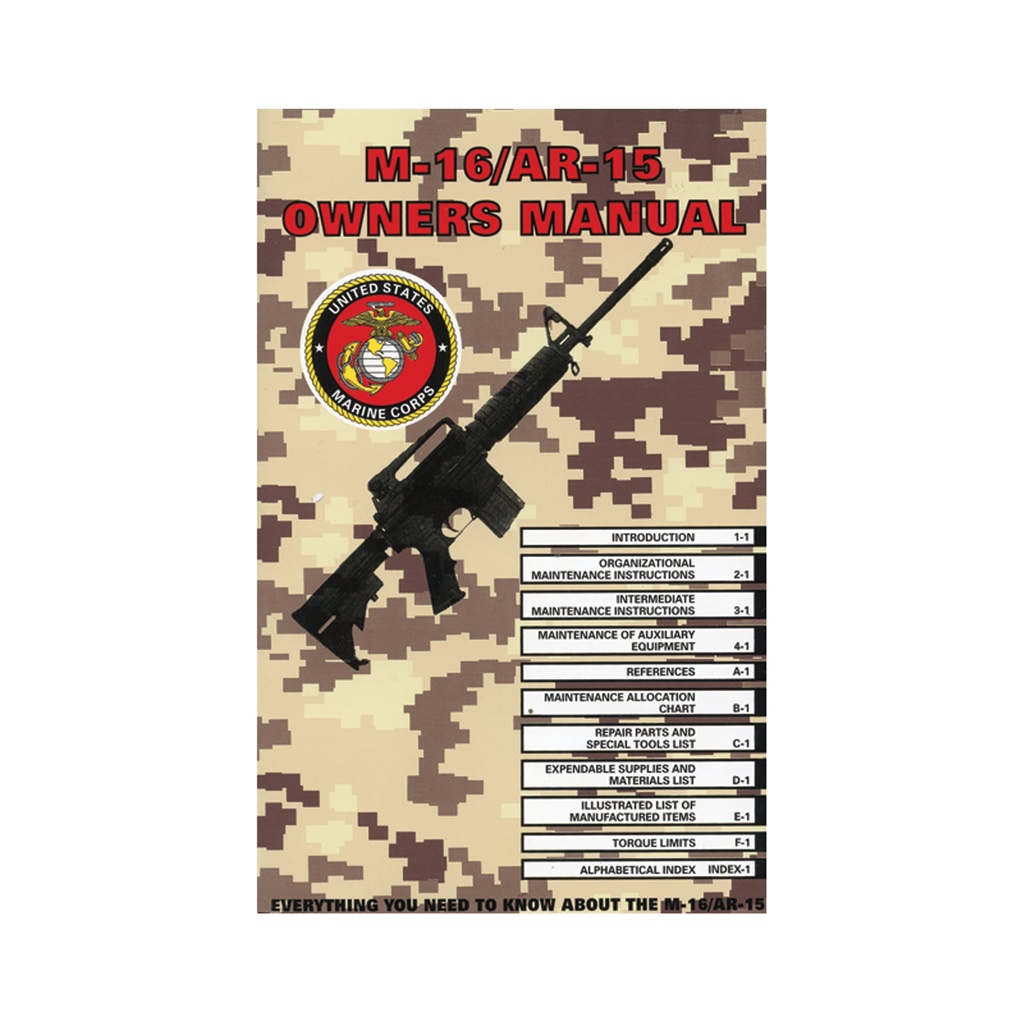

Marine Field AR-15 Armorer’s Manual - Camo Cover
3 sold in last 24 hours
This Marine Field AR-15 Armorer’s Manual reads like a seasoned rifle tech at your bench. Modeled on USMC discipline, it walks you through M16/AR-15 maintenance, repair, inspection, refinishing, and reassembly with clear, step-by-step structure. Armorer tool references and full parts lists make it ideal for home builders, shop counters, and classes. The camo cover and Marine emblem signal what it is: a field-tough reference for people who want their rifle to run when it matters.
What This AR-15 Armorer’s Manual Actually Does for You
The Marine Field AR-15 Armorer’s Manual is written for the owner who wants their rifle to run correctly every time, not just "most of the time." Instead of vague tips or internet rumor, it gives you a disciplined, step-by-step approach to M16/AR-15 maintenance, inspection, repair, and reassembly, modeled on Marine Corps armorer standards.
Think of it as having a calm, experienced armorer at your bench. It won’t turn you into a gunsmith overnight, but it will give you a structured process you can trust whenever you break an AR-15 down, put it back together, or check it before serious use.
Why a Marine-Style AR-15 Manual Matters for Reliability
Most AR-15 owner’s guides are either too shallow or too scattered. This manual is laid out like a field technical reference: organized, direct, and focused on keeping the rifle serviceable under real conditions. That makes it especially useful for instructors, shop owners, and anyone responsible for more than one rifle.
The camouflage cover and USMC emblem aren’t just decoration. They’re a visual shorthand for the mindset: inspection first, preventative maintenance over guesswork, and clear criteria for when a part is acceptable and when it is not. Instead of “it looks fine,” you get specific checks you can repeat reliably.
Inside the Marine Field AR-15 Armorer’s Manual
Step-by-Step Maintenance and Cleaning
The manual walks you through cleaning and maintenance in a predictable order. That matters more than most people realize. The same sequence every time means you’re less likely to miss carbon buildup, unusual wear, or small parts walking out of spec.
Sections cover core assemblies—upper, lower, bolt carrier group, barrel, and small parts—with simple, checklisted instructions. You’re not left guessing what to clean, what to inspect, or when to replace.
Repair, Reassembly, and Final Checks
When you go beyond cleaning—swapping a part, rebuilding an upper, or working on a student’s rifle—the manual provides structured reassembly procedures and final checks. That includes torque references, alignment points, and functional tests to confirm that the rifle isn’t just back together, but back together correctly.
This is where a disciplined manual shines: instead of trusting memory or a random video you watched six months ago, you follow a proven sequence every time.
Designed for the AR-15 Owner, Instructor, and Shop Counter
This isn’t a coffee-table gun book. It’s a bench tool. The layout, table-of-contents blocks, and straightforward headings make it easy to flip directly to the section you need while the rifle is open in front of you.
That format makes it especially useful in three settings:
- Individual owners who want a reliable reference whenever they service their own AR-15 or an M16-pattern rifle.
- Instructors who need a common standard for classes, armorer courses, or patrol rifle programs.
- Retail shops and ranges that want customers to leave with more than just a rifle—specifically, with a way to keep it running.
Build Quality, Layout, and Real-World Use
Field-Tough Camo Cover
The digital desert camo cover is more than a theme choice. Manuals get tossed on benches, into range bags, and across shop counters. A high-contrast camo cover is easier to spot in a cluttered workspace, and it visually matches the rifles and gear it supports.
The clear red title and AR-15 silhouette on the cover mean you can identify it instantly from a stack of books or from across the room, which matters more than you’d expect when you’re mid-project and reaching for a reference.
USMC Emblem and Technical Tone
The United States Marine Corps emblem signals the manual’s inspiration: armorer-level discipline and a no-drama, no-fluff presentation. The tone is straightforward and technical, not tactical theater. It doesn’t romanticize the rifle; it treats it as a machine that needs specific care to work every time.
That tone is exactly what most AR-15 owners need: less mythology, more clear guidance.
How This Manual Complements Your Other AR-15 Resources
You might already have online videos, manufacturer instructions, or forum bookmarks. This manual doesn’t replace those; it stabilizes them. It gives you a consistent baseline process you can follow, then refine with platform-specific details from your particular upper, barrel, or aftermarket parts.
Because it’s a physical book, it’s immune to dead links, pulled videos, or service outages. When you’re at the bench, that kind of reliability is underrated. You can annotate margins, flag key pages, and hand it to a newer shooter or student with confidence that they’re reading something structured and vetted, not a random comment thread.
What People Ask Before Buying a Stun Gun for Protection
How effective are stun guns for self defense?
A stun gun for self defense is a contact tool, not a magic remote. Its effectiveness depends on three things: how solidly you make contact with major muscle groups, how long you maintain that contact, and the amperage delivered. A good stun gun can disrupt movement and create an opening to escape, but you still need awareness, distance management, and a plan. It’s a close-range solution, best paired with good habits rather than relied on as your only protection strategy.
Does voltage or amperage matter more in a stun gun?
Voltage gets the marketing headlines; amperage does the real work. Very high voltage numbers mostly help electricity arc through clothing or across small air gaps. The actual stopping power of a stun gun comes from current (amperage) and how long that current is applied. A realistically rated, well-built device with solid contact points and a reliable battery is far more important than any "million volt" claim on a package.
Is this stun gun legal to carry in my state?
Stun gun legality is state- and city-specific, and it changes. Some states treat a stun gun for self defense like any other defensive tool, others restrict carry in certain locations, and a few require permits or have age limits. Before you buy or carry, check your state statutes and any local ordinances, and remember that rules can differ between home carry, vehicle carry, and public buildings. When in doubt, look up current law or consult a qualified local source rather than assuming.
Practical Takeaway: A Manual That Builds Competence
The Marine Field AR-15 Armorer’s Manual doesn’t try to impress you with flash; it quietly makes you more competent. Whether you’re a new owner learning basic maintenance or an instructor setting a standard for students, this camo-covered guide gives you a repeatable way to clean, inspect, repair, and reassemble an AR-15 with confidence.
Paired with safe handling and quality parts, it becomes part of a larger reliability system: clear processes, consistent checks, and fewer surprises when it’s time for the rifle to work. You finish not just owning an AR-15, but actually understanding how to keep it running.