Shadow Gatekeeper Access-Control Caltrops - Black Steel
10 sold in last 24 hours
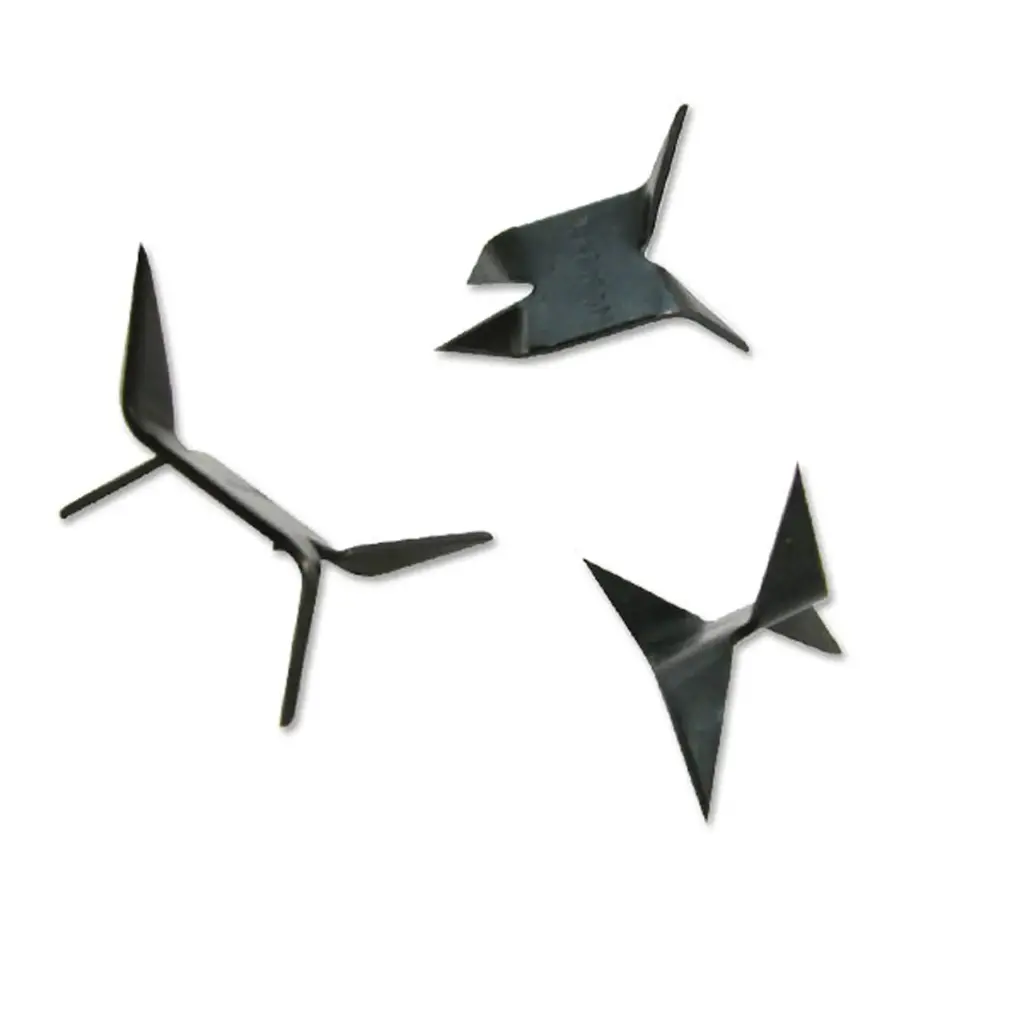
These black steel caltrops are built for one job: quiet, reliable access control. Four-point geometry means an upright spike every time they hit the ground, making placement fast and predictable. The compact 10-pack drops into a kit, glove box, or training bag without bulk. Thin folded-steel construction keeps them light but sharp, with a modern black finish that reads professional, not decorative—ideal for security scenarios, demonstrations, or historical and tactical training setups.
Shadow Gatekeeper Access-Control Caltrops: Simple, Predictable Access Control
Shadow Gatekeeper Access-Control Caltrops - Black Steel are a minimalist solution for one very specific job: control where people, feet, or tires can go. No moving parts, no tech, just consistent four-point geometry that lands upright and stays ready. They’re built for teams and individuals who want a compact, reliable access-control tool that behaves the same way every time it leaves the hand.
How These Caltrops Work for Access Control
Each caltrop uses a classic four-point pattern cut and folded from steel. No matter how you drop or scatter them, at least one spike ends up pointing upward. That “always-up” design is what turns a handful of small steel forms into an effective access-control field.
In practice, that means you can create a deterrent or slow-down zone quickly. Dropped across a walkway, stairwell approach, or training lane, they force anyone pushing through to slow down, avoid, or risk stepping or rolling onto sharp points. For security and training contexts, that slowdown buys awareness, time, and control over where contact happens.
Build Quality: Why the Four-Point Black Steel Design Matters
On access-control tools like these, reliability is about geometry and consistency more than anything else. Shadow Gatekeeper leans on a proven silhouette: thin, folded steel with precise angles that favor upright landings over flashy aesthetics.
Four-Point Geometry for Consistent Upright Landings
The four-point geometry means that for every way a caltrop can fall, there is always one spike oriented up. The folded planes lock those angles in, limiting wobble and reducing the chance of a flat landing. That consistency is what makes fast deployment possible—you don’t need to “place” each piece. You throw or scatter, and the design does the rest.
Black Steel Finish for Low-Profile Use
The modern black steel finish keeps reflections down and presentation clean. In a training setting, the black silhouette reads clearly against mat, gravel, or concrete. In display or collection contexts, it feels more like modern access-control hardware than a novelty prop. The finish also helps disguise minor scuffs, keeping a 10-pack looking uniform over repeated use.
Carry and Deployment: Designed to Live in a Kit, Not a Drawer
These caltrops are small enough to ride in a pouch, glove box, or dedicated access-control pocket without taking over your loadout. A 10-pack gives you enough coverage for a narrow passage, stair entry, or short hallway stretch without adding significant bulk.
Compact 10-Pack for Fast Field Placement
Ten units is a practical number for real-world use: enough to create a meaningful spread across a choke point while still being easy to manage with one hand. You can drop them individually for precise placement or quickly broadcast them with a controlled scatter when speed matters more than perfect spacing.
Integration with Security, Training, and Display Setups
Because there are no moving parts or batteries, Shadow Gatekeeper fits naturally into several roles: as a visual and practical teaching aid in access-control classes, as a demonstration tool in security briefings, or as a heritage-inspired piece in tactical and historical displays. The clean silhouette makes them understandable at a glance: four points, one always up, purpose obvious.
Practical Effectiveness: What These Caltrops Actually Do (and Don’t)
Caltrops like these are about terrain shaping, not magic solutions. Properly deployed, Shadow Gatekeeper caltrops can slow movement through a path, force route changes, or create a clear visual and physical deterrent where you want people to think twice before crossing.
They are most effective when used with planning: placed in choke points, at likely approach lanes, or as a controlled demonstration of access denial. They are not a replacement for alarms, cameras, or trained personnel, but they can complement those systems by physically influencing where contact occurs and how fast someone can move.
What People Ask Before Buying a Stun Gun for Protection
How effective are stun guns for self defense?
A stun gun for self defense is a contact tool, not a distance solution. Its effectiveness depends on three main factors: current (amperage), where you make contact, and how long you can maintain that contact. Real-world use is about disrupting someone’s ability to keep acting, not launching them across a room. A solid self-defense plan treats a stun gun as one option among others—awareness, movement, barriers, and, where appropriate, additional tools—rather than a single cure-all device.
Does voltage or amperage matter more in a stun gun?
Voltage gets the headline, but amperage does the work. High-voltage marketing numbers mostly describe the ability to arc through clothing and air gaps; the actual effect on a person depends on how much current flows through the body and for how long. In practical terms, look for honest specs, proven build quality, and good contact design rather than chasing “million-volt” claims. A well-built stun gun with sensible current, solid electrodes, and a reliable power source will outperform a flashy spec sheet that never delivers consistent contact.
Is this stun gun legal to carry in my state?
Stun gun laws vary widely by state and sometimes by city or county. Some areas treat a stun gun for self defense much like other defensive tools, while others require permits, restrict carry locations, or ban them outright. Before buying or carrying, check your state statutes and, if applicable, local ordinances. Look for terms like “electronic control device,” “stun gun,” or “conducted energy weapon” in the legal text. When in doubt, consult local law enforcement guidance or an attorney familiar with weapons laws in your jurisdiction.
Carrying with Intent: Turning Tools into a Thought-Out Plan
Whether you are building an access-control kit with caltrops, selecting the best stun gun for personal protection, or rounding out a broader self-defense strategy, the principle is the same: tools are only as good as the thinking and training behind them. Shadow Gatekeeper Access-Control Caltrops - Black Steel offer a simple, reliable way to shape where contact happens. Pair that with clear procedures, practice, and an honest understanding of what each tool can and cannot do, and you move from owning gear to having a plan.
The result is quiet confidence: you understand your options, your environment, and how to use straightforward tools—like these caltrops or a stun gun for self defense—to support the decisions you’ve already made about safety and control.