Low-Profile Guardian Keychain Personal Alarm - Black
4 sold in last 24 hours
This keychain personal alarm is built for people who want real personal safety without carrying a weapon. The recessed button gives you a quick warning chirp or a continuous 120dB alarm, and the bright LED helps you see locks, paths, or faces in low light. It blends in with your keys, rides easily in any pocket, and activates with a simple thumb press. A calm, practical way to add an always‑ready layer of protection to your everyday carry.
What This Keychain Personal Alarm Actually Does for Your Safety
This is not a stun gun, and that’s exactly the point. The Midnight Beacon Dual-Action Keychain Personal Alarm - Black is for people who want practical personal protection without carrying a weapon or worrying about amperage, contact time, or close‑range strikes. Instead of electrical force, it uses what’s often more realistic for everyday self defense: distance, attention, and time to escape.
Clipped to your keys, this compact personal alarm delivers a 120dB siren and a super bright LED at the press of a thumb. It’s built for commuters, students, night‑shift workers, and anyone who wants a fast way to draw attention and break an assailant’s focus long enough to move to safety.
How This Personal Alarm Works in Real Self Defense Situations
In self defense, the first win is usually not knocking someone out; it’s buying yourself enough time and space to get away. This keychain personal alarm is designed around that reality. Where a stun gun for self defense demands close contact and the courage to drive metal prongs into someone’s body, this alarm asks for one simple motion: press a recessed button with your thumb.
The smaller press gives you a warning burst. That brief chirp lets you test the device discreetly or send a clear signal before things escalate. A full press triggers a continuous 120dB siren that keeps screaming until you release it. That level of sound is intentionally uncomfortable at close range: it startles, disorients, and draws unwanted attention to anyone targeting you.
Why Loudness and Light Matter More Than Looking “Tactical”
A lot of personal protection gear is sold on appearance—aggressive styling, faux‑military branding, dramatic names. This alarm goes the opposite direction. Its advantage is that nobody notices it until you need it. At the moment you press the button, two things happen that actually matter in self defense:
- A 120dB alarm cuts through normal street noise, stairwell echoes, and parking lot quiet.
- A bright LED light gives you instant visibility on locks, paths, and faces.
Those two elements—sound and light—do real work: they disrupt an attacker’s plan, attract witnesses, and help you navigate your escape route.
Why Choose This Over or Alongside a Stun Gun for Self Defense?
People who research protection tools often compare a stun gun for self defense with other options like alarms, pepper spray, or tactical flashlights. Each tool solves a different problem. A stun gun requires you to make firm, repeated contact on an attacker’s body for more than a split second, and its effectiveness depends on amperage, contact area, and the courage to stay close.
This keychain personal alarm is about early intervention. You can use it before anyone lays a hand on you. If you feel followed in a parking garage, walking to your car, or passing through a stairwell, you can trigger the alarm while you still have distance. The sound changes the scenario: instead of a quiet, one‑on‑one encounter, you’ve just announced the problem to everyone nearby.
For many practical buyers, the best personal protection setup is layered: a non‑contact option (like this alarm), possibly a defensive spray, and, only if you’re trained and legally permitted, a stun gun or other direct‑contact tool. This alarm fills that first layer—fast, simple, low‑risk to you if you misjudge a situation.
Build Quality and Everyday Carry Reality
Any personal protection tool is useless if it stays at home in a drawer. This keychain personal alarm is designed to live where you already carry something every day: on your keys.
Compact Housing, Recessed Controls
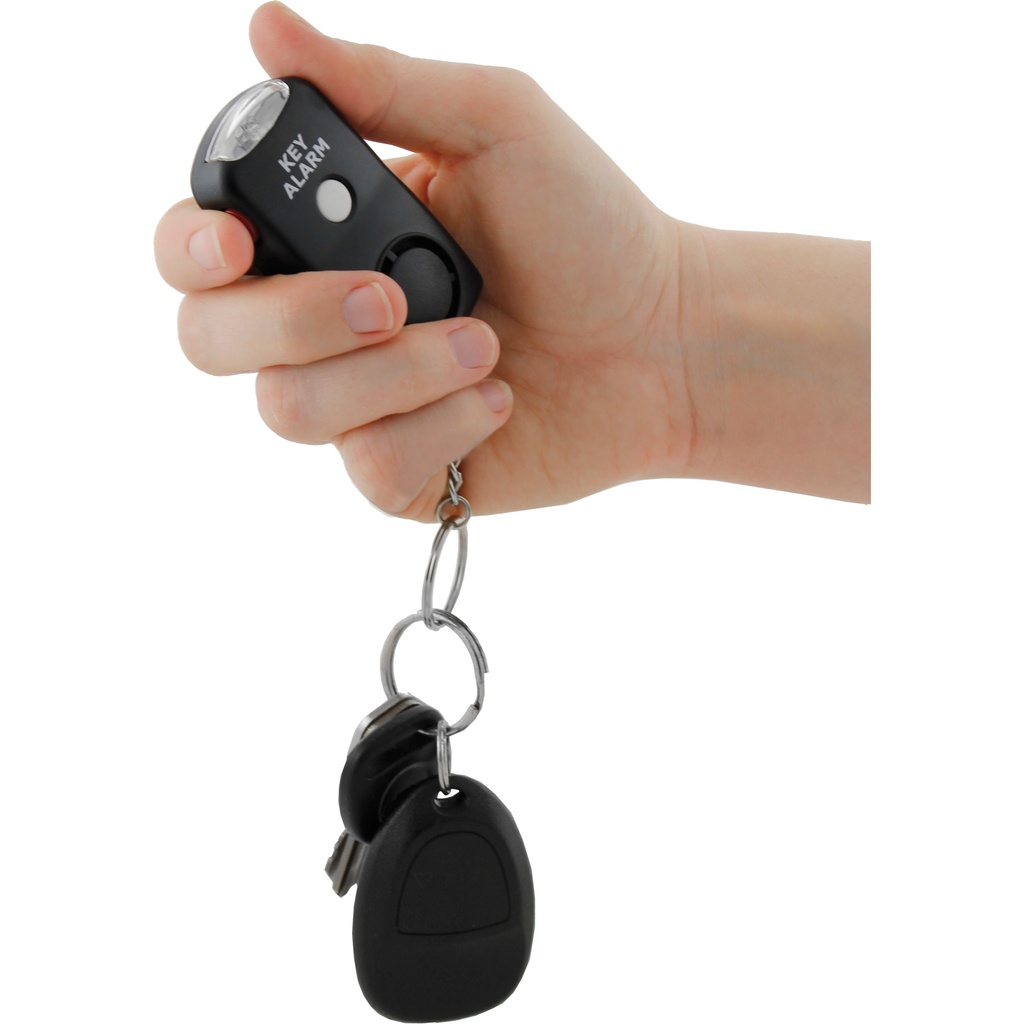
The black plastic housing is small enough to disappear into your closed hand. The main activation button is recessed to reduce accidental presses in a bag or pocket, but still easy to find by feel with your thumb. A secondary button controls the LED for quick light without triggering the siren, so you can use it as a practical key light every day.
This matters because constant use as a light keeps the alarm familiar in your hand. Under stress, you want a motion your body already knows: thumb on button, press. That’s much more reliable than a rarely‑touched device buried somewhere in a purse.
Keychain Integration and Discreet Carry
An integrated metal loop and short chain connect directly to your standard split ring. The included keys and fob in the product imagery aren’t just props; they show the intended use: this should ride exactly where your car key or building fob lives.
From the outside, it looks like any other small black key fob. That’s deliberate. Many people don’t want to advertise that they’re carrying protection tools. This alarm gives you practical self defense capability in a package that won’t raise questions at work, school, or on public transit.
Sound, Light, and the Reality of Personal Protection
With stun guns, honest experts talk about amperage instead of inflated voltage numbers. With alarms, the honest conversation is about decibels and behavior.
A 120dB alarm at arm’s length is seriously uncomfortable to be around. Most people will instinctively move away from it, cover their ears, or at least break eye contact. That reflex is what you’re buying. It’s not a magic force field, but it makes the cost of staying close to you much higher for a potential attacker, especially in a hallway, parking ramp, campus path, or apartment corridor where sound carries.
The LED adds another subtle advantage: it removes the darkness. Many opportunistic attacks rely on shadows and surprise. A bright light in the face at very close range can be momentarily disorienting; used more conservatively, it simply improves your awareness so you see people and routes earlier.
What People Ask Before Buying a Stun Gun for Protection
How effective are stun guns for self defense?
Stun guns can be effective in self defense, but only under specific conditions. The real factors are amperage (current), contact time, and where you place the contact points. You need firm pressure on a vulnerable area for more than a second or two, and you have to be close enough—and calm enough—to stay engaged while someone is actively resisting.
That’s why many instructors recommend pairing a stun gun for self defense with non‑contact tools like this keychain personal alarm. The stun gun is a close‑range, last‑resort option. An alarm helps you intervene earlier—when you first feel unsafe—without closing distance or committing to a physical confrontation.
Does voltage or amperage matter more in a stun gun?
For stun guns, amperage matters far more than advertised voltage. The huge “million volt” numbers you see are mostly marketing. Human skin and clothing limit how much of that voltage turns into actual current through the body. It’s the current (amperage), the area of contact, and how long you maintain that contact that determine whether a stun gun disrupts muscle function or just causes momentary pain.
This keychain personal alarm sidesteps that whole problem. Instead of relying on electrical force, it uses noise and light—tools that don’t require you to evaluate voltage claims or aim for specific target zones. You press a button, create a scene, and move away.
Is this stun gun legal to carry in my state?
This specific product is not a stun gun; it’s a non‑lethal keychain personal alarm. That’s important for legality. Many states and cities heavily regulate or restrict stun guns and other electronic control devices—where you can carry them, whether you can conceal them, and who is allowed to purchase them.
By contrast, personal alarms are generally legal to carry in most states, including on school campuses and public transportation, because they don’t deliver force; they just make sound and provide light. However, laws and policies can vary by jurisdiction and institution. It’s still smart to check your state and local regulations, as well as workplace or school rules, especially if you’re considering pairing this alarm with a stun gun for self defense or other defensive tools.
Carrying This Alarm with Confidence
The goal of any protection tool is not to make you feel invincible; it’s to make you more prepared and more deliberate. This keychain personal alarm fits that mindset. It’s simple enough that you can practice using it in under a minute: grasp your keys, find the recessed button by feel, and press for either a warning chirp or a full alarm.
Carried daily, it becomes part of a calm, informed personal safety plan: situational awareness first, distance if you can, sound and light if you need them, and only then—if you’ve chosen to carry one—a direct‑contact tool like a stun gun for self defense. That layering is what real self defense professionals teach: not drama, not hype, just practical steps that stack the odds in your favor.
If you want a low‑profile, non‑intimidating way to upgrade your everyday carry, this keychain personal alarm gives you a realistic, legal, and easy‑to‑use first line of protection.