Shadow Sentinel Quick-Deploy Duty Baton - Black Steel
6 sold in last 24 hours
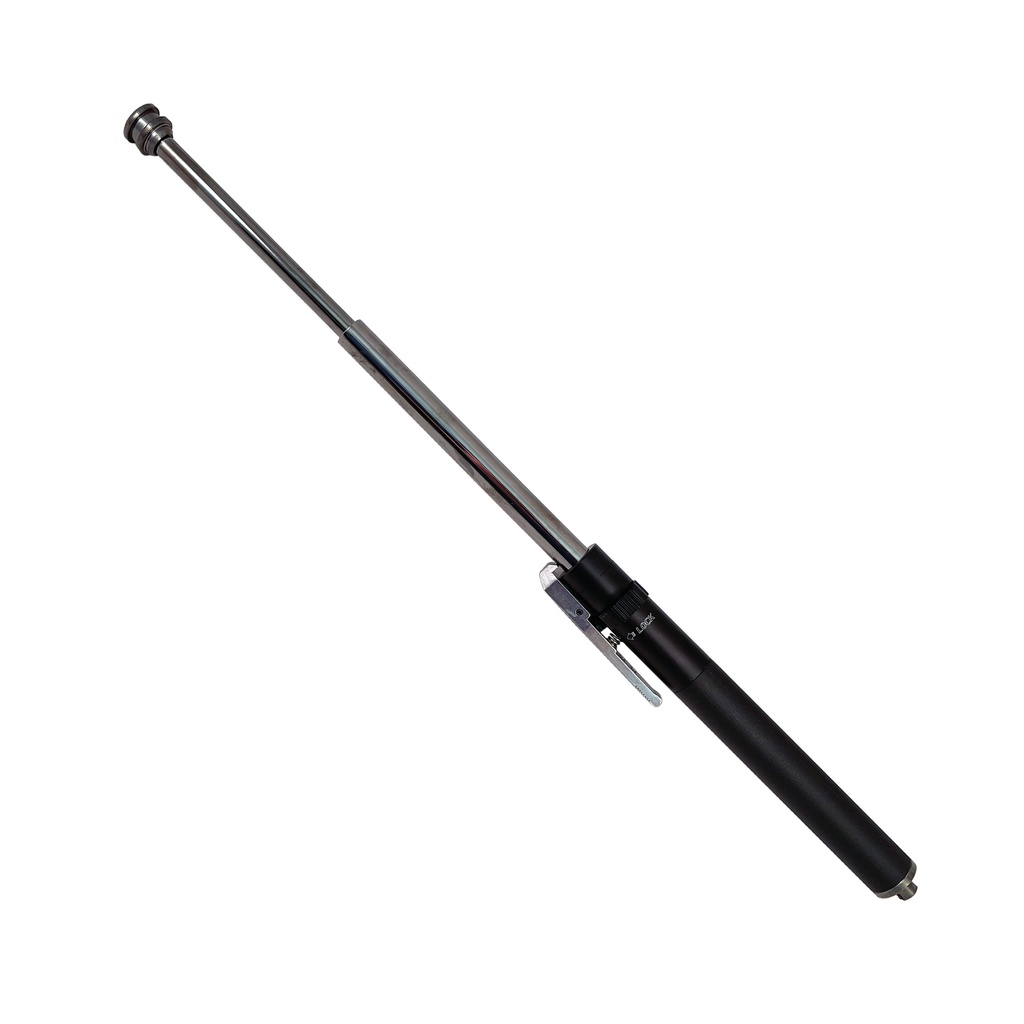
This automatic baton is built for people who take personal protection seriously. One press snaps it to a solid 15-inch reach; closed, it rides at 7.25 inches with a discreet pocket clip. Steel construction, a true on/off safety, and a positive lock in the open position make it a control tool you can trust, not a toy. Ideal for security, patrol, or anyone who wants fast, predictable impact coverage in a compact, professional package.
What This Automatic Baton Actually Does for Personal Protection
The Shadow Sentinel Quick-Deploy Duty Baton is designed for one job: give you fast, mechanical control and extra reach in a confrontation without pretending to be something it isn’t. This isn’t a stun gun and it doesn’t rely on voltage marketing. It’s a compact steel impact tool that opens automatically to a solid 15-inch baton, locks in place, and gives you a clear, simple option for self defense when distance and control matter.
Closed, it stays discreet at 7.25 inches with a pocket clip that carries like a small flashlight. Open, it becomes a rigid striking and directing tool sized for real personal protection—not a gimmick you’d be afraid to trust.
How a Quick-Deploy Baton Works for Self Defense
Automatic batons are straightforward: press the release, the telescoping steel shaft snaps out, and the locking mechanism secures it in the extended position. For self defense, that means you can move from empty hands to a 15-inch impact tool in roughly the time it takes to draw a pen from your pocket.
Instead of worrying about amperage, voltage, or contact time the way you would with a stun gun for self defense, your focus here is on mechanics and timing: accessing the baton, deploying it cleanly, and using basic, gross-motor strikes and pressure to create space and disengage. Under stress, simple is better. A baton like this gives a clear binary state—either closed and safe with the switch on, or open and locked, ready to direct or strike.
Build Quality: Why This Baton Is Worth Carrying
When you carry a tool for personal protection, reliability matters more than marketing claims. The Shadow Sentinel is all steel: a matte black handle and polished telescoping shaft designed to take impact and keep its shape. There’s no decorative branding, no fragile plastic links—just a straightforward defense tool built around strength and control.
Steel Construction and Locking Confidence
The telescoping segments are steel-on-steel, which matters in real use. Thin or poorly fitted sections can wobble, rattle, or collapse under impact. Here, the extended baton locks into a single, solid line you can feel as soon as it opens. For self defense, that translates into predictable strikes and directed pushes instead of wondering whether the baton will fold on contact.
Real On/Off Safety You Can See and Feel
Accidental deployment in a pocket or on a belt is more than embarrassing—it can be dangerous. The on/off safety slider on this baton provides a clear physical barrier between carry and deployment. In the "safe" position, a bump or snag won’t trigger it. When you intentionally move it to "fire," deployment is immediate and authoritative. You’re not trusting a hidden spring; you’re actively choosing readiness.
Carry Reality: How This Baton Fits into Daily Self Defense
A defense tool you leave at home is useless. The Shadow Sentinel is sized to be carried the way people actually live and work. At 7.25 inches closed, it fits discreetly along a pocket seam, inside a bag organizer, or clipped inside a waistband under a loose shirt. The low-profile black handle reads more like a small flashlight or tool than a weapon to casual observers.
Pocket Clip and Orientation Under Stress
The pocket clip isn’t an afterthought—it’s the anchor that lets you build a consistent draw. Set it in the same place every day, index on the clip, and your hand will find it without looking. That consistency matters far more than any tactical buzzword. In a self-defense context, knowing exactly where your baton sits and how it draws is a bigger advantage than any extra inch of length.
Why Choose a Baton Instead of a Stun Gun for Self Defense?
Many people start their protection research with a stun gun for self defense because of dramatic "million volt" marketing. A stun gun can be effective, but only with enough amperage, solid contact, and sustained time on target—often several seconds, at very close range, while someone is moving. That’s a lot to manage under stress.
A baton like this trades electricity for simple physics. You gain reach, leverage, and mechanical control without worrying about battery charge, amperage, or whether clothing will block contact points. The downside is that you still need basic training and a clear understanding of what is legally considered reasonable force where you live. The upside is that the tool itself is simple, robust, and doesn’t depend on power levels or skin contact to work.
What People Ask Before Buying a Stun Gun for Protection
How effective are stun guns for self defense?
Stun guns can be effective in self defense, but not the way most marketing suggests. The "10 million volt" headlines are mostly theater. Voltage is the pressure that pushes current; it helps the charge arc, especially through clothing. The real stopping power comes from amperage—the amount of current actually flowing into the body—and from how long you can maintain contact. A brief touch often causes pain and flinch, but not a guaranteed stop. Several seconds of solid contact in the right areas can disrupt muscle control, but that assumes you’re close, stable, and able to keep the electrodes in place on a struggling person. That’s why many self-defense instructors treat stun guns as a pain and distraction tool, not a magic off-switch.
Does voltage or amperage matter more in a stun gun?
Amperage matters more for practical effectiveness. Voltage sounds impressive in ads because the numbers can be huge, but you only need enough voltage to jump a small gap or get through clothing. After that, it’s the current (amperage), contact area, and contact time that determine whether a stun gun for self defense is just unpleasant or actually disabling for a moment. When you evaluate any stun gun, look past the voltage claims and ask: what’s the current output, how reliable is the build, how solid is the switch and safety, and can I realistically keep contact under stress?
Is this baton legal to carry in my state?
Baton and stun gun laws are heavily state- and city-dependent. Some places treat impact weapons like batons more strictly than electronic defense tools; others restrict both. Before you carry this baton—or any stun gun for self defense—check your state law, then drill down to county and city ordinances. Look for terms like "impact weapon," "club," "baton," or "electronic control device." If you work in security or patrol, your employer may also have specific policies. When in doubt, a brief consult with a local attorney or a reputable self-defense instructor who tracks local law is inexpensive compared to the cost of guessing wrong.
Carrying with Competence: Turning Gear into Real Protection
Owning a baton or a stun gun for self defense doesn’t automatically make you safer. Competence does. With the Shadow Sentinel, competence means a few concrete habits: carrying it in the same place every day, practicing drawing and opening it until it’s smooth, understanding your local use-of-force rules, and getting at least basic instruction on where and how to strike for escape, not punishment.
If you’re comparing this baton to a stun gun for personal protection, the key distinction is simplicity. There are no voltage claims to interpret, no batteries to maintain, no uncertainty about whether thick clothing will block contact. You’re choosing a straightforward, mechanical tool that rewards practice and clear thinking. Paired with good judgment and a plan to disengage rather than escalate, it becomes part of a calm, informed self-defense strategy—not a lucky charm.