Duty-Ready Army Combatives Field Manual - Yellow
10 sold in last 24 hours
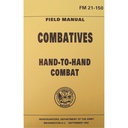
This Operator-Ready Combatives Field Manual puts authentic Army hand-to-hand combat doctrine in your hands, exactly as soldiers saw it in 1992. You get rifle-bayonet and empty-hand combatives organized by distance, pressure, and escalation—built for training, not entertainment. Instructors gain a ready-to-run curriculum; students get a structured path from basic movements to more advanced throws, strikes, and counters. It’s a no-drama, no-fluff reference that feels like being coached by a seasoned NCO instead of sold to by a marketer.
What This Combatives Field Manual Actually Gives You
The Operator-Ready Combatives Field Manual is a faithful reprint of the 1992 U.S. Army FM 21-150 on hand-to-hand combat. It’s not a flashy martial arts book; it’s a working manual built to teach soldiers fundamental combatives skills that hold up under stress. You’re getting a structured, doctrine-based approach to close-quarters fighting—rifle-bayonet work, takedowns, strikes, and counters—organized so you can train it, test it, and actually retain it.
If you’re an instructor, this feels like a plug-and-play curriculum. If you’re a student, it gives you a clear progression instead of a grab-bag of cool techniques. And because it’s a true Army field manual reprint, the emphasis is on practicality, repeatability, and battlefield relevance.
How This Army Combatives Manual Is Structured
Unlike many commercial self-defense books that jump from technique to technique, this combatives field manual is built around range, position, and simple decision points. That structure is what made it work for soldiers learning under pressure—and it’s what makes it so valuable now for serious practitioners and instructors.
Range-Based Progression That Matches Real Fights
The manual walks you through rifle-bayonet fighting, then into standing hand-to-hand combat and ground engagement. It shows how tools, distance, and body position change your options, instead of pretending one magic move solves everything. You see how bayonet thrusts, butt-strokes, and parries flow into strikes, takedowns, and finishing techniques once you’re inside weapon range.
Clear, Trainable Technique Sequences
Each technique is broken down into simple, positional steps that can be drilled with or without gear. Throws, chokes, joint locks, and counters are presented with enough detail to coach from, but not so much fluff that you lose the thread. This is doctrine designed to be taught to a platoon, not a showcase of obscure moves.
Why This Combatives Manual Still Matters for Modern Training
Even though this Army combatives field manual was published in 1992, the core value hasn’t changed: it gives you a clean baseline of close-quarters skills you can build on. Modern programs have evolved, but they started by either reacting to, or refining, this type of material. Owning it lets you see the foundation.
For instructors, that means you can compare your current curriculum to what soldiers were expected to learn: entries, balance disruption, follow-through, and basic control. For students, it’s a way to sanity-check what you’re being taught against a doctrinal source that had to work for real people, not just athletes.
Instructor-Friendly Layout for Class Planning
The manual’s chapter and section structure makes it easy to convert into lesson plans. You can pull a block on rifle-bayonet drills, a block on basic throws, and a block on finishing techniques and have a coherent session that respects fatigue, safety, and skill-building order. It’s especially useful for law enforcement, ROTC, and private combatives programs that want a recognizable framework.
Authentic Doctrine, Not Marketing Copy
Because this is a direct field manual reprint, every page reflects how the Army actually framed combatives at the time. The language is plain, the focus is functional, and nothing is added for drama. That authenticity is exactly what many buyers want: a reference that shows what real-world training looked like, not what a publisher thought would sell.
Build Quality and Field-Use Practicality
This is a softcover, yellow-cover reprint designed to feel like the original government-issue manual. The minimalist layout and black-on-yellow print make it easy to read in varied lighting, and the compact, flexible binding makes it practical for use on the mat, at the range, or in the classroom.
Easy to Mark Up, Tab, and Work From
The paper and layout lend themselves to annotation. You can highlight sequences, add your own safety notes, or tab key sections for fast reference during training. Unlike a glossy coffee-table book, this is meant to be a working document—folded, written in, and carried.
Portable Format for On-the-Move Training
The manual’s size and softcover binding make it easy to toss in a range bag, duty pack, or instructor binder without adding bulk. It’s light enough that you can keep it on hand as a reference for ad-hoc training sessions, in-service refreshers, or pre-deployment combatives blocks.
Who This Combatives Field Manual Is Best For
This Operator-Ready Combatives Field Manual is ideal for:
- Combatives instructors who want a doctrinal backbone for their curriculum.
- Martial artists who want to understand how military hand-to-hand systems are organized.
- Military and law enforcement trainees looking for a reference that matches institutional training culture.
- Serious self-defense students who prefer structured, principle-based material over flashy demos.
- Collectors and historians interested in how close-combat doctrine was framed in the early 1990s.
It’s not about turning you into a movie-style fighter; it’s about giving you a grounded, realistic picture of how one major institution taught people to handle close-quarters violence.
What People Ask Before Buying a Stun Gun for Protection
How effective are stun guns for self defense?
Stun guns can be effective for self defense in very specific conditions: you must make solid contact with the attacker’s body, hold that contact for at least a second or two, and have a model that delivers enough current (amperage), not just flashy voltage claims. They shine as a disruption tool at very close range—breaking an attack long enough for you to escape—rather than as a guaranteed “one-touch knockout” device. Training on access, grip, and follow-through matters as much as the device itself.
Does voltage or amperage matter more in a stun gun?
Amperage matters more than voltage in a stun gun for self defense. Voltage is mostly about overcoming clothing and skin resistance; once you’re past that threshold, it’s the current (amperage) and contact time that determine how much the attacker’s muscles actually lock up or malfunction. Many "million volt" labels are marketing theater. When you choose the best stun gun for personal protection, prioritize build quality, reliable current output, and a design that lets you maintain contact under stress.
Is this stun gun legal to carry in my state?
Stun gun laws vary by state and sometimes by city. Some places treat a stun gun for self defense like any other defensive tool; others require permits, restrict carry in certain locations, or ban them outright. Before you buy what you consider the best stun gun to carry, check your state statutes and local ordinances, and verify whether there are age restrictions, background requirements, or transport rules. When in doubt, consult your local law enforcement or an attorney familiar with weapons laws in your area.
Using Doctrine and Devices Together: Practical Protection Mindset
Owning an Army combatives field manual and carrying a stun gun for self defense are both about the same underlying goal: practical protection. One gives you a mental and physical framework for managing close-quarters violence; the other adds a specific tool you can use at contact distance. Neither is magic on its own.
When you pair structured training—whether from this combatives manual, a reputable class, or both—with a well-chosen stun gun for personal protection, you stack the odds in your favor. You understand distance, angles, and timing, and you also have a contact-range tool that can disrupt an assault long enough to get out.
The takeaway is simple: build skill first, add tools second. This Operator-Ready Combatives Field Manual gives you a doctrine-backed way to think about and train close-quarter skills. From there, if you choose to carry a stun gun for self defense, you’ll be better prepared to deploy it calmly, legally, and effectively as part of a broader protection plan—not as a talisman you hope will save you.