Signal Authority Multiservice Survival Manual - Yellow Cover
9 sold in last 24 hours
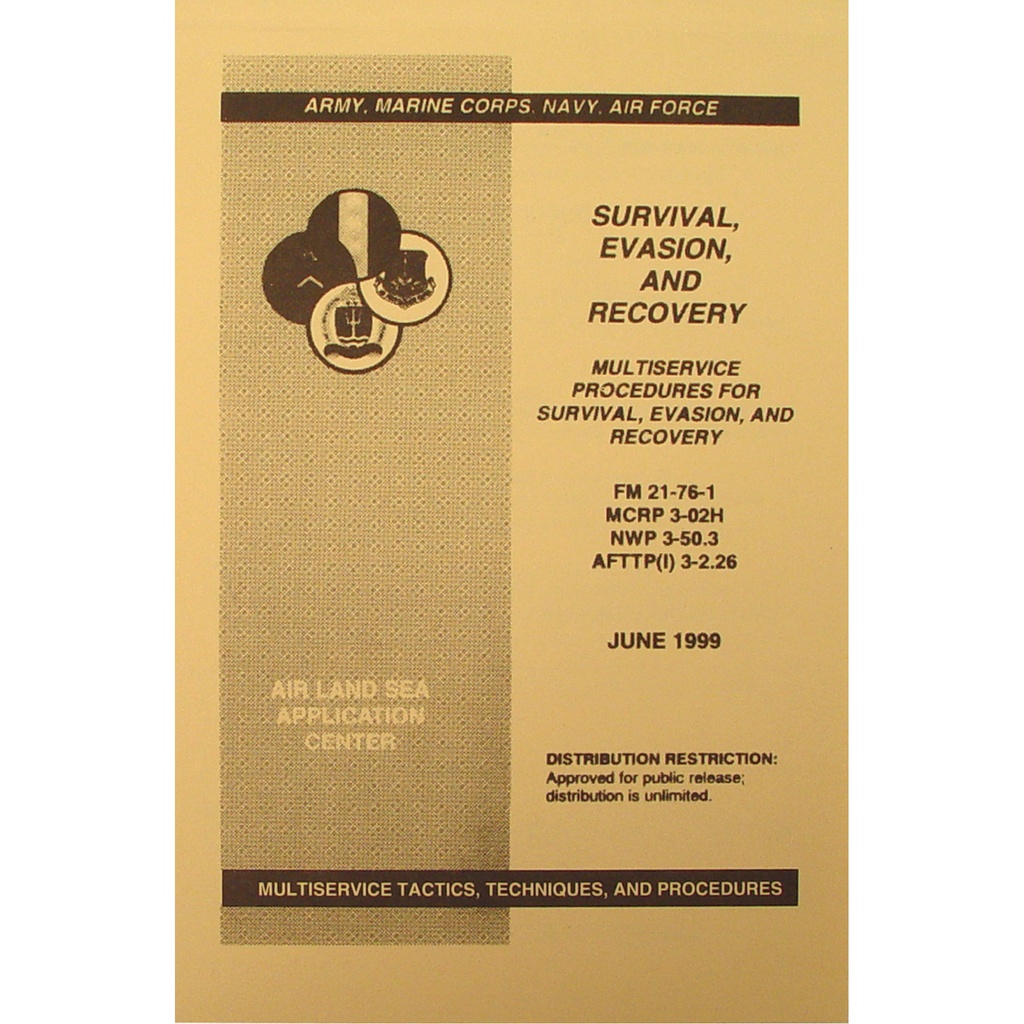
This multiservice survival manual is designed to steady your thinking when conditions go sideways. Drawn from official SERE doctrine, it walks you through evasion, shelter building, navigation, signaling, improvised medical care, water, and food—step by step. The signal yellow cover makes it easy to locate in a pack, vehicle, or cache. It’s equally at home in a training classroom, a bug‑out bag, or a glovebox: a compact survival reference that trades hype for field-tested procedures.
What This Multiservice Survival Manual Actually Does for You
This is a reprint of an official multiservice survival, evasion, and recovery field manual—built to give you clear steps when everything around you is uncertain. Instead of dramatic stories or wilderness entertainment, it delivers structured checklists and procedures you can follow under stress. The signal yellow cover isn’t about style; it’s about grabbing the right book fast when you’re cold, tired, and making real decisions.
Written as joint doctrine for Army, Marine Corps, Navy, and Air Force personnel, this manual turns vague ideas about “being prepared” into specific, repeatable actions: how to move without being seen, how to build shelter with what you actually have, how to signal effectively, and how to work through medical, water, and food problems in order of priority.
Why an Official Multiservice Survival Manual Matters
There are countless survival books on the market. Most are written from one person’s experience, sometimes useful, sometimes not. This multiservice survival manual is different: it represents tactics, techniques, and procedures refined by multiple branches over time. That makes it especially valuable if you care about what tends to work across many scenarios, not just one instructor’s favorite tricks.
The content is organized for field use rather than entertainment. Sections are built so you can jump in where you are: evasion, shelters, navigation, signaling, medical, water, food. That structure is deliberate. In a real emergency you rarely read front to back—you flip straight to the problem in front of you. This manual respects that reality.
How This Survival Manual Is Structured for Real Use
The core of this multiservice survival guide is its stepwise approach. It doesn’t assume you’re calm, warm, and well-rested. It assumes stress, fatigue, and imperfect gear, then walks you through:
- Evasion: Movement techniques, pattern disruption, and fieldcraft to avoid detection on foot and in varied terrain.
- Shelters: Practical shelter options using available materials, with attention to weather, signature reduction, and energy conservation.
- Navigation: Map-and-compass methods, terrain association, and what to do when you have neither.
- Signaling: Visual, auditory, and electronic signaling principles that prioritize contrast, timing, and recognizability.
- Medical: Immediate care, stabilization, and improvisation when you’re far from a clinic and working with minimal supplies.
- Water and Food: Locating, purifying, and rationing water; realistic guidance on food as a lower priority than most people assume.
Instead of long theory sections, you get concise explanations followed by concrete actions—what to check first, what to do if that fails, and how to avoid common mistakes that cost energy or expose your position.
Build and Format: Why the Yellow Cover and Simple Layout Help
This is a softcover, signal yellow multiservice survival manual designed to be thrown into packs, vehicles, and training kits. The high-visibility cover is intentional: in a cluttered trunk, a dark rucksack, or a gear room full of equipment, this is the book your eye goes to first. That matters when the conditions are already working against you.
Field-Readable Layout
The interior follows the typical military field-manual style: structured headings, numbered procedures, and clear section breaks. That means you’re not hunting through narrative text for the one diagram or instruction you actually need. You scan for the right heading—evasion, shelters, navigation, signaling, medical, water, food—and act from there.
Compact and Kit-Friendly
The size and softcover format make it suitable for gloveboxes, range bags, and bug-out kits. It’s durable enough for regular reference and training, but inexpensive and light enough that you won’t hesitate to actually carry it. This is doctrine you keep on hand, not a coffee-table book you’re afraid to scuff.
Who This Survival Manual Serves Best
Because it’s an official multiservice survival, evasion, and recovery reference, this manual fits several roles:
- Prepared civilians and preppers who want more than generic tips and prefer structured, tested procedures.
- Instructors and trainers building courses around realistic survival, SERE-style concepts, or fieldcraft fundamentals.
- Security and response professionals who may operate in remote, unstable, or resource-poor environments.
- Students of military doctrine who want to understand how official guidance frames survival and evasion problems.
It’s equally useful as a teaching backbone and as a quiet reference you study on your own, one section at a time, before adding field practice.
Turning Panic into Process: Using the Manual Effectively
A survival manual is only as useful as the way you integrate it. This one is built around checklists and procedures, which makes it easier to translate into habits. A practical approach is simple:
- Pick one domain—shelters, navigation, or signaling—and read that section without rushing.
- Take one or two techniques and practice them under less-than-ideal conditions, not just sunny afternoons.
- Use the manual as a planning tool: build packing lists, contingency routes, and training drills directly from its sections.
In an actual emergency, you won’t have time to learn from scratch. The combination of prior exposure plus a concise, structured reference you can flip open is what turns a survival manual from reassuring idea into real capability.
What People Ask Before Buying a Stun Gun for Protection
How effective are stun guns for self defense?
A stun gun for self defense is a close-contact tool designed to create pain, muscle disruption, and hesitation—buying you a chance to break contact and escape. Its effectiveness depends less on advertised voltage and more on amperage (the actual current delivered), contact time, and where you make contact. Against a determined attacker, a stun gun works best when you’ve trained to close distance safely, target large muscle groups or nerve-rich areas, and immediately move away once you’ve created an opening. It’s not a magic "one-touch knockout" device, but in practiced hands it can be a useful part of a broader personal protection plan.
Does voltage or amperage matter more in a stun gun?
Voltage gets the headlines in stun gun marketing, but it’s mostly theater. You only need enough voltage to push current through clothing and skin. Once you reach that threshold, higher numbers don’t automatically mean better protection. Amperage—the amount of current actually flowing—is what drives pain and muscle disruption. Contact area and contact time matter too: a well-designed stun gun with solid electrodes, stable power delivery, and a few seconds of firm contact on the body is far more reliable than a "million volt" device with weak current and poor build quality.
Is this stun gun legal to carry in my state?
Stun gun legality in the United States is state- and sometimes city-specific. Many states allow a stun gun for self defense with few restrictions; others require a permit, limit carry in certain locations, or regulate sales. Before you buy or carry any stun gun, check your state statutes and local ordinances—typically under weapons, electronic control devices, or self-defense tools. When in doubt, look for your state’s attorney general or state police guidance, and remember that separate rules may apply to schools, government buildings, and air travel.
Practical Preparedness: Pairing Knowledge with Tools
Tools and knowledge work best together. A stun gun for personal protection is most effective when you understand how it works, what it can and cannot do, and where it fits in your overall safety plan. A multiservice survival manual, on the other hand, reinforces your ability to think clearly and act methodically when circumstances push you beyond everyday problems.
Carry what you can actually use under stress, and study what you might need before you’re forced to improvise. This signal yellow multiservice survival manual is built for that quiet preparation—so that if a long night, bad weather, or the wrong place at the wrong time ever catches up with you, you’re not starting from zero. You’re following a process.